COMPANY NEWS
List of Complete Documentation for GMP Validation of Aseptic Isolators
As a core barrier system for the production of sterile preparations, cell-based therapies, and sterility testing, an aseptic isolator requires a comprehensive and compliant set of validation documentation—a mandatory prerequisite for passing GMP on-site inspections and fulfilling the filing requirements stipulated under Order No. 818. Our integrated aseptic filling and freeze-drying isolator system strictly adheres to GMP Annex 1 (Sterile Products), the 9206 guidelines of the Pharmacopoeia, GAMP 5, and ALCOA+ data integrity standards. We provide clients with a complete, full-lifecycle validation documentation package—covering FAT, SAT, and the full DQ-IQ-OQ-PQ sequence. Outlined below is the comprehensive set of documentation required for project implementation.
I. Initial Planning and Risk-Related Documents
Validation Master Plan / Risk Assessment Report / User Requirements Specification
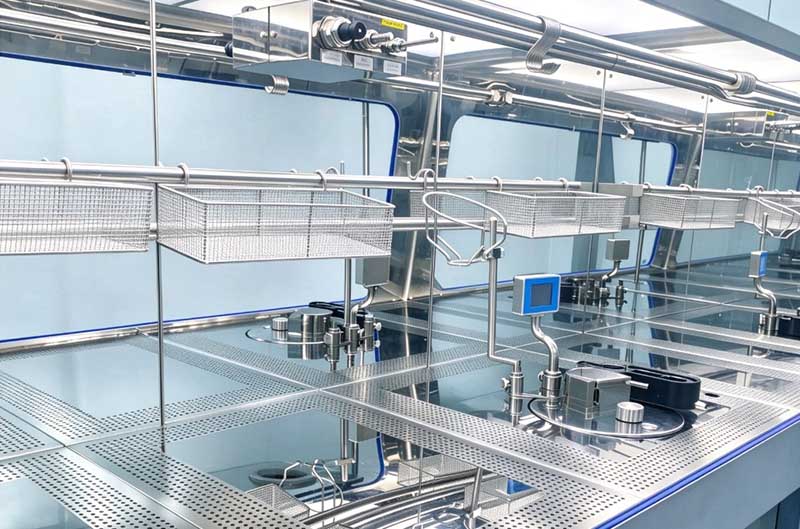
Q: Validation Master Plan (VMP)
A: Defines the scope of isolator validation, regulatory basis, organizational responsibilities, validation sequence, acceptance criteria, revalidation frequency, and the process for handling deviations.
Q: Risk Assessment Report (FMEA)
A: Identifies risks related to chamber containment, VHP sterilization, gloves and sleeves, HEPA filters, control systems, material transfer, and alarm/interlock functions; establishes Critical Process Parameters (CPPs) and Critical Quality Attributes (CQAs); and provides guidance for defining validation test protocols.
Q: User Requirement Specification (URS)
A: The client’s initial operational requirements, covering aspects such as environmental/background classification, chamber dimensions, operator workstations, sterilization modes, data traceability, access control, and interface specifications. It serves as the input basis for Design Qualification (DQ).
Q: Design Qualification (DQ) Protocol and Report
A: Verification that the equipment design—including blueprints, materials, component selection, and hardware/software configuration—complies with the URS, GMP standards, and relevant national standards. This process confirms sterilization compatibility, containment integrity, alarm logic, and data integrity, thereby completing the DQ closed-loop.
II. Factory Acceptance Test (FAT) Documentation
FAT Test Protocol; Raw FAT Data/Records; FAT Acceptance Report
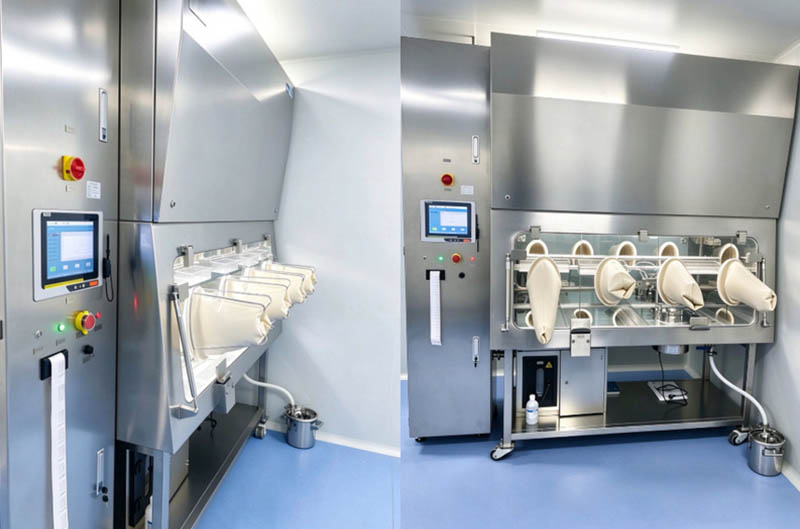
✅General equipment layout, electrical schematics, and P&IDs (Piping and Instrumentation Diagrams)
✅Material certificates: Material reports for the chamber (316L stainless steel), gloves/sleeves, and seals; documentation confirming material compatibility with sterilization processes
✅Certificates for core components: Factory test certificates for HEPA filters; factory calibration certificates for pressure differential, temperature/humidity, and VHP concentration sensors
✅PLC control system documentation, software version list, and GAMP5 software assessment files
✅Records of individual unit functional tests: Fans, VHP generator, transfer chambers, interlocked doors, and alarm functions
✅Factory test records: Raw data from factory leak tests and preliminary (unloaded) sterilization cycle tests
Site Acceptance Test (SAT) Documentation (upon equipment arrival and positioning)
✅SAT Protocol, SAT Execution Records, and SAT Acceptance Report
✅Equipment Unpacking and Inspection Record: Verification of model, serial number, and accessory list; visual inspection
✅Installation Environment Verification Record: Confirmation of power supply, compressed air, exhaust, water supply/drainage, and background cleanroom environment
✅On-site Hardware Configuration Verification, Software Version Confirmation, and Access Level/Permission Functionality Check Record
III. Complete Set of IQ, OQ, and PQ Documentation
On-site installation and commissioning completed
Installation Qualification (IQ) – Complete Set of Documentation
Objective: To verify that the equipment is installed correctly in accordance with the design and manufacturer’s specifications, and that all components, instruments, and utilities meet the design requirements.
✅IQ (Installation Qualification) protocol, raw data/records, and summary report.
✅Calibration certificates for instruments and devices (e.g., differential pressure gauges, temperature/humidity sensors, particle counters, VHP concentration sensors, etc.).
✅On-site PAO leak test records and reports for HEPA filters.
✅Utility installation inspection records (e.g., power supply, gas/air supply, and exhaust ductwork connections).
✅List of hardware components (with certificates of conformity on file) and software installation qualification records.
✅As-built drawings (electrical, piping, and layout diagrams).
✅Initial drafts of SOPs for equipment operation and maintenance; personnel training records and attendance sheets.
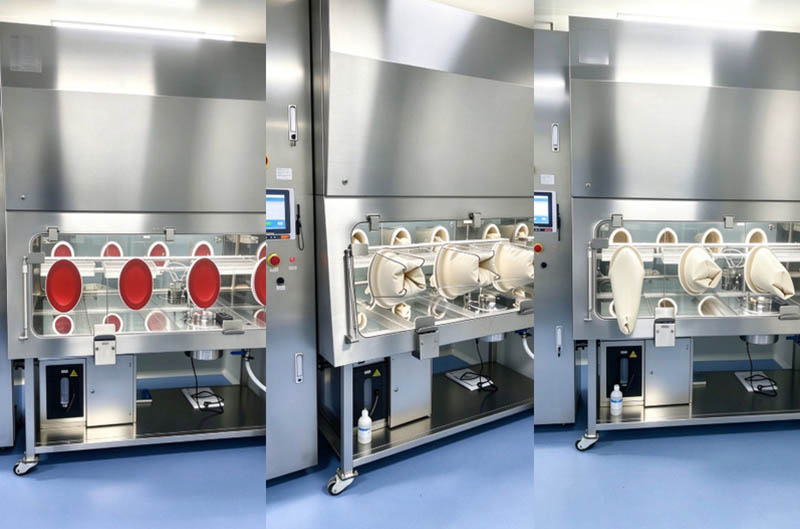
Complete set of Operational Qualification (OQ) documentation
Objective: To ensure that, with the equipment in an unloaded state, all functions, parameters, alarms, and operational cycles comply with the design specifications.
✅OQ Qualification Protocol, OQ raw test records, and OQ summary report
✅Chamber leak rate test (pressure decay method) record; glove/sleeve integrity test report
✅Pressure differential control verification: test records for the ability to maintain pressure differentials within the chamber under both static and dynamic conditions
✅Unidirectional airflow velocity and airflow pattern visualization (smoke test) records
✅Qualification of the empty-chamber environment regarding airborne particles (Grade A, at rest), airborne microorganisms, and settleable microorganisms.
✅Testing of all alarm and interlock functions: door interlocks, abnormal pressure, temperature/humidity limit excursions, VHP concentration alarms, and power-failure protection.
✅Qualification of the VHP sterilization cycle: empty-chamber challenge tests using biological indicators (BIs) and chemical indicator (CI) distribution; verification of aeration (residue removal), with documentation confirming hydrogen peroxide residue levels ≤ 1 ppm.
✅Verification records for the sterilization and transfer functions of pass-through chambers / Rapid Transfer Ports (RTPs).
✅Data integrity testing: audit trails, access/privilege management, data export, and printing—ensuring compliance with ALCOA+ principles and 21 CFR Part 11 requirements.
✅Documentation of all deviations, including investigation reports and closure records.
Performance Qualification (PQ) Documentation Package
Objective: To simulate actual production/operational conditions—including full-load and worst-case scenarios—in order to demonstrate that the equipment can consistently and reliably maintain a Grade A aseptic environment.
✅PQ protocol, raw data/records, and summary report
✅BI (Biological Indicator) challenge test reports for three consecutive successful VHP sterilization cycles under full-load conditions, demonstrating a microbial kill efficacy of ≥6 log
✅Monitoring records for airborne particles, settle plates (sedimentation bacteria), active air sampling (viable airborne microorganisms), and surface microorganisms under full-load conditions
✅Simulation of production interventions (glove manipulations, material transfer in/out) and dynamic environment qualification
✅Media fill simulation test report (for aseptic manufacturing scenarios)
✅Worst-case scenario testing: full-load conditions, multiple material transfers, and operational stability across consecutive batches
✅Establishment of thresholds for routine monitoring parameters; reports on the handling and closure of all deviations
IV. Supporting Documentation
Equipment User Manual, Maintenance Manual, and Parts List
Equipment User Manual, Maintenance Manual, and Parts List
Complete set of Standard Operating Procedures (SOPs): Operation, Cleaning, Sterilization, Glove Changing, Maintenance & Calibration, and Troubleshooting/Fault Handling
Training Materials: Courseware for operation, maintenance, and validation training, along with attendance and assessment records
Re-validation/Re-qualification Plan: Periodic re-qualification schedules
Re-qualification triggers and requirements following changes, major repairs, relocation, or extended periods of inactivity
Validation status review documentation (for use in Annual Quality Reviews)
AN Delivery Advantages
For its sterility testing isolator projects, AN provides a standardized validation template package—ready for immediate use in audits—and collaborates with the client’s quality, production, and engineering teams to execute the full closed-loop validation lifecycle (FAT, SAT, DQ, IQ, OQ, and PQ). Covering diverse applications such as sterile preparations, cell therapies, and sterility testing, these solutions align with GMP standards and the regulatory requirements of "Order No. 818," helping enterprises efficiently complete equipment acceptance and on-site inspections.
