COMPANY NEWS
Standard Operating Procedure for Biosafety Cabinets
Standardize the use, cleaning, disinfection, maintenance, and emergency response procedures for Biological Safety Cabinets (BSC) to ensure the safety of laboratory personnel, samples, and the experimental environment; prevent the leakage of biological aerosols and cross-contamination; guarantee regulatory compliance in equipment operation and the reliability of experimental data; and ensure adherence to the standards and requirements governing the management of biosafety laboratories and the use of laboratory equipment.
I. Equipment Overview and Safety Requirements
Job Responsibilities and Preparation for Use
This protocol applies to the daily operation, cleaning and disinfection, routine maintenance, performance verification, and decommissioning of all Class II biological safety cabinets (BSC) in the laboratory. It covers all personnel who come into contact with or utilize these BSCs for experimental procedures, such as microbiological testing, cell culture, and sample processing. For Class I and Class III biological safety cabinets, this protocol may be adapted and implemented in conjunction with the respective equipment manufacturer’s instructions.
Job Responsibilities
Biosafety Cabinet
01: Operators
Operators must strictly adhere to this SOP. This includes conducting pre-use equipment inspections, following standardized operating procedures, performing post-use cleaning and disinfection, and maintaining accurate usage records. Operators must be familiar with potential equipment risks and emergency response protocols; any equipment anomalies or malfunctions must be reported immediately. Operating equipment in violation of procedures or while the equipment is known to be faulty is strictly prohibited.
02: Laboratory Administrator
Responsible for overseeing compliance with standard operating procedures for biosafety cabinets, including the periodic review of usage, cleaning, and disinfection logs. Coordinates the regular calibration, testing, maintenance, and servicing of equipment; maintains an equipment inventory; manages equipment certificates and documentation; and organizes both pre-assignment and refresher training for personnel.
03: Equipment Maintenance Personnel
Responsible for the annual performance testing of biosafety cabinets, filter replacement, troubleshooting and repairs, as well as the verification of airtightness and airflow parameters. This role includes issuing compliant test reports to ensure that all equipment specifications meet national standard requirements.
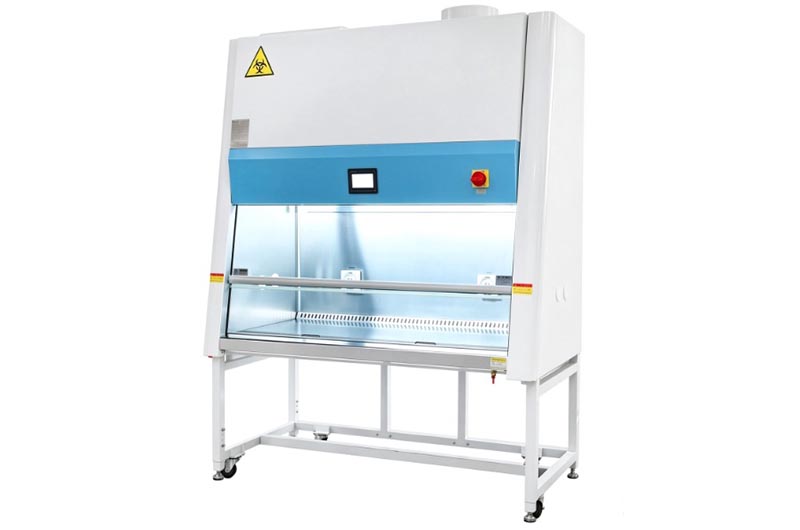
Q: Operating Principle
A: A biosafety cabinet creates a sterile environment within its workspace through the use of clean, unidirectional airflow, a negative-pressure sealed structure, and High-Efficiency Particulate Air (HEPA) filtration. It also prevents the escape of biological aerosols generated during experiments, thereby protecting the operator, the experimental samples, and the external environment. It serves as a core piece of protective equipment for biological experiments.
Q: General Safety Guidelines
A: Operation is restricted to one person per unit. Any specialized two-person procedure requires a laboratory risk assessment and formal registration; such operations are permitted only within compliant, large-scale safety cabinets.
The use of open flames, volatile toxic chemicals, or highly corrosive reagents inside the safety cabinet is strictly prohibited. Storing personal items, miscellaneous debris, or equipment unrelated to the experiment is also forbidden.
Equipment must pass an annual certification and be used only within its valid period. The use of equipment lacking a valid certificate, exceeding its inspection due date, or triggering a fault alarm is strictly prohibited.
Throughout operation, the cabinet’s glass sash must be maintained at the designated working height. Opening the sash beyond this height or leaving it fully open is strictly prohibited.
When moving your arms into or out of the cabinet, do so with smooth, controlled motions. Avoid rapid sweeping movements or frequent passing through the air curtain, as this can disrupt the laminar airflow and create a risk of contamination.
Q: Inspection of Environment and Equipment
A: Inspect the environment surrounding the safety cabinet. Ensure a clearance of ≥30 cm is maintained on both sides and at the rear of the equipment for maintenance access; the top must be free of obstructions or accumulated debris. Verify that the laboratory ventilation is functioning properly and that there is no airborne dust. Check the equipment’s power cord, plug, and switch to ensure they are intact and in good condition; confirm that the unit is properly grounded, with no signs of electrical leakage, aging wiring, or damage. Review the equipment status labels to confirm that the unit is in good working order and has passed required calibration or verification.
Q: Cleaning and Disinfection of the Cabinet
A: Remove all remaining items and waste from the cabinet, and clear any debris or stains from the work surface. Use 75% ethanol to wipe down the work surface, the interior walls of the cabinet, the inner side of the glass door, and the frame of the access opening. When wiping, follow this sequence: from top to bottom, from inside to outside, and from clean areas toward potentially contaminated areas. Do not spray ethanol directly into a cabinet while the fan is running, as this poses a safety risk. Allow the surfaces to air-dry after wiping to ensure no residual disinfectant interferes with experiments.
Q: Ultraviolet (UV) Disinfection
A: Close the glass door and turn on the internal UV germicidal lamp. Leave it on for 30 minutes to thoroughly sterilize the interior of the cabinet. Turn off the UV lamp once disinfection is complete; do not leave the UV lamp on for extended periods while the unit is unattended.
✅Preparation and Arrangement of Items
All consumables, reagents, samples, and equipment required for the experiment must be retrieved in advance. After disinfecting their surfaces with 75% ethanol and allowing them to air-dry, place these items into the cabinet. This prevents the need for frequent retrieval or placement of items during the experiment, which could disrupt the airflow. Items must be arranged according to strictly defined zones: sterile consumables and clean reagents should be placed in the "clean zone" (toward the back/interior of the cabinet), while samples to be processed and contaminated equipment should be placed in the "outer zone." This ensures a clear separation between clean and contaminated areas. All items must be kept away from air supply outlets and return air grilles; they should maintain a distance of at least 15 cm from the cabinet side walls and filters, and at least 10 cm from the glass door, ensuring that no airflow paths are obstructed.
✅Warm-up
Connect the power supply and activate the equipment’s fan and lighting systems. Allow the unit to run unloaded for 5–10 minutes. Once the laminar airflow within the cabinet has stabilized and the air pressure is within the normal range—and provided there are no active airflow alarms or error indicators—you may proceed with experimental operations.
✅Personal Protective Equipment (PPE)
Operators must wear appropriate laboratory coats, disposable gloves, and face masks; safety goggles should be used when necessary. Ensure that the cuffs of the gloves completely cover the cuffs of the laboratory coat. The wearing of loose-fitting clothing or jewelry is prohibited, as these may disrupt the airflow or cause contamination.
II. Operational Procedures
Standard Operating Procedures and Wrap-up for Experiments
Q: Proper Procedure for Entering the Cabinet
A: Gently extend both arms into the cabinet’s work zone and remain still for one minute to allow the airflow to stabilize before beginning any experimental work. During operation, do not rest your elbows or arms on the cabinet frame, the work surface, or the air grilles, as this may disrupt the negative-pressure laminar airflow.
Q: Best Practices for Experimental Procedures
A: Perform all experimental tasks toward the middle or rear of the work zone—well away from the access opening—to minimize the risk of aerosol escape. Adhere strictly to the principle of "clean operations first, potentially contaminating operations later" to prevent cross-contamination. When performing actions prone to aerosol generation—such as opening sample containers, pipetting, or mixing—use gentle, slow movements and avoid vigorous agitation. Keep items inside the cabinet neatly organized; do not pile them up or mix incompatible materials. Dispose of used consumables and liquid waste promptly by placing them into designated waste containers—never leave them scattered on the work surface.
Q: Process Monitoring and Prohibitions
A: Throughout the operation, monitor the equipment’s status. Observe the fan, airflow, and pressure differential indicators to ensure they are functioning correctly, and check for any irregularities such as unusual noises, alarms, or air leaks. Do not operate the equipment beyond its specified range or capacity. Unauthorized disassembly or modification of the cabinet structure or filtration system is strictly prohibited. During operation, minimize the frequency of moving your arms in and out of the cabinet, and avoid sudden or large movements that could disrupt the airflow.
Q: Handling Unexpected Interruptions
A: In the event of an equipment alarm, abnormal airflow, power failure, or other unforeseen issues, stop the experiment immediately. Keep the glass door closed and wait until the airflow has stabilized. If a sample is spilled or there is a risk of aerosol leakage, ensure you are wearing appropriate personal protective equipment (PPE), pause all operations, and initiate emergency disinfection procedures.
Post-Operation Cleanup Procedures
Biosafety Cabinet
01: Aerosol Evacuation
Upon completion of all experimental procedures, keep the fan running for an additional 5–10 minutes to thoroughly evacuate any residual biological aerosols from the cabinet, thereby eliminating potential contamination risks.
02: Removal and Sorting of Items
Seal and clean sterile consumables and remaining reagents before removing them and returning them to their designated storage locations. Transfer experimental liquid waste into a waste container holding a 5,000 mg/L chlorine-based disinfectant; allow it to soak for 30 minutes before final disposal. Place sharp objects immediately into a dedicated sharps container; seal and replace the container once it is three-quarters full. Seal and package contaminated waste, affix a contamination warning label, and arrange for transport and disposal in accordance with regulations for the management of biological waste.
03: Final Cleaning and Disinfection
After removing all items, thoroughly disinfect the interior of the cabinet once more. Use 75% ethanol to wipe down all surfaces—including worktops, interior walls, glass doors, the access opening, supports, and all corners, crevices, and joints—paying particular attention to areas that have come into contact with samples. Do not use high-concentration chlorine-based disinfectants for prolonged periods on stainless steel surfaces, as this may cause corrosion. Allow the cabinet to air-dry after disinfection, ensuring that no residual liquids, debris, or stains remain inside.
04: Equipment Shutdown Procedure
Once the cabinet is clean and any aerosols have been completely cleared, turn off the lighting system. Keep the UV lamp on for 30 minutes to perform a final sterilization. After the UV disinfection is complete, turn off the UV lamp, the fan, and the main power supply. Close the glass door completely to ensure the cabinet remains sealed.
05: Documentation
Accurately complete the "Biosafety Cabinet Usage Log," providing detailed information such as the date of use, power-on/power-off times, user name, nature of the experiment, equipment operating status, disinfection method and duration, and any irregularities (if applicable). Ensure that entries are legible and complete, and archive the records for future reference.
III. Routine Maintenance and Periodic Servicing
Common Anomalies and Emergency Procedures
Routine Maintenance
✅Before daily use, check the power supply, indicator lights, and airflow status. After use, thoroughly clean and disinfect the cabinet, ensuring the interior and the surrounding area remain clean and dry. Clear any debris from the work surface promptly, and ensure no residual waste liquids or unnecessary items accumulate. Verify the equipment status labels daily to ensure no items are past their expiration or validity dates.
✅Clean the equipment surfaces, glass doors, and control panels thoroughly. Inspect the return-air grilles for blockages or dust accumulation, and clean them as necessary. Monitor the brightness and operational duration of the UV lamps; keep a record of their cumulative usage time, and replace them once they reach 8,000 hours of operation or if their brightness degrades beyond acceptable limits.
✅Check for abnormal operating noise, fan instability, or irregular pressure differential readings. Verify the integrity of the cabinet seals and the proper functioning of the glass doors. Clean the heat dissipation channels and inspect for aging or loose wiring; report any issues immediately for maintenance.
Engage a qualified third-party organization annually to conduct comprehensive performance testing—including assessments of airflow velocity, cleanliness, negative pressure, airtightness, filter integrity, and UV lamp intensity. Upon passing, obtain a verification certificate and affix a compliance label. Based on usage and test results, have qualified personnel replace the HEPA (high-efficiency particulate air) filters and pre-filters; the equipment must undergo re-verification before it can be returned to service.
Common Anomalies and Emergency Procedures
Q: The equipment triggers an airflow alarm or shows an abnormal pressure differential.
A: Immediately cease all experiments and manual operations. Keep the cabinet door closed while allowing the fan to continue running. Check for any items obstructing the grilles or if the cabinet door has been opened too wide; once corrected, observe whether the system returns to normal. If the alarm persists, shut down the equipment, attach a "faulty" or "out-of-service" tag, notify the administrator, and do not use the unit until it has been inspected and repaired by maintenance personnel.
Q: Sample or waste liquid spillage and contamination
A: Immediately stop operation, keep the fan running to prevent aerosol spread; wear full protective gear, cover the contaminated area with absorbent material, spray with 5000mg/L chlorine-containing disinfectant, and let it soak for 30 minutes; wipe away the contaminants, disinfect the work surface and surrounding area again, keep a record of the entire process, and report to the laboratory administrator afterwards.
Q: Abnormal noise, leakage, or power outage
A: If abnormal noise, odor, or leakage warning occurs, immediately shut down the power, stop using the equipment, and post a warning sign. Report to maintenance personnel for repair. In case of a sudden power outage, immediately stop the experiment, keep the cabinet door closed, and run the equipment under no-load for 10 minutes after power is restored. Experimental operations can only resume after the airflow is stable and disinfection is complete.
Q: Filter failure or insufficient cleanliness
A: Immediately stop using the equipment, isolate the cabinet, and prohibit any biological experiments; contact professionals to replace the filter and conduct a comprehensive inspection. The equipment can only be put back into use after passing the re-inspection, and the equipment maintenance record should be updated accordingly.
Q: Filter failure, cleanliness not up to standard
A: Immediately stop using the equipment, isolate the cabinet, and prohibit any biological experiments; contact professionals to replace the filter and conduct a comprehensive inspection. The equipment can only be put back into use after passing the re-inspection, and the equipment maintenance record should be updated accordingly.
