COMPANY NEWS
Classification, Application, and Compliance Analysis of Biological Safety Cabinet
A Biological Safety Cabinet (BSC) is equipped with airflow control and high-efficiency air filtration systems, which effectively mitigate the risks that hazardous aerosols—generated during laboratory procedures—may pose to the operator, the experimental samples, and the surrounding environment. Its protective mechanism can be summarized as a three-tiered system of safeguards.
✅ Personnel Protection (Inward Airflow Barrier): A negative-pressure inward airflow is maintained at the front access opening, "trapping" potentially pathogen-laden aerosols within the cabinet and preventing them from reaching the operator’s face, chest, or respiratory tract.
✅ Sample Protection (Downward Laminar Flow): A clean, unidirectional downward airflow within the cabinet creates a near-sterile local environment for the materials being handled, shielding samples from external microbial contamination and cross-contamination.
✅ Environmental Protection (Exhaust Filtration): Air exhausted from the cabinet passes through a HEPA (High-Efficiency Particulate Air) filter, which captures microorganisms and airborne particles, thereby protecting both the laboratory environment and the outside atmosphere.
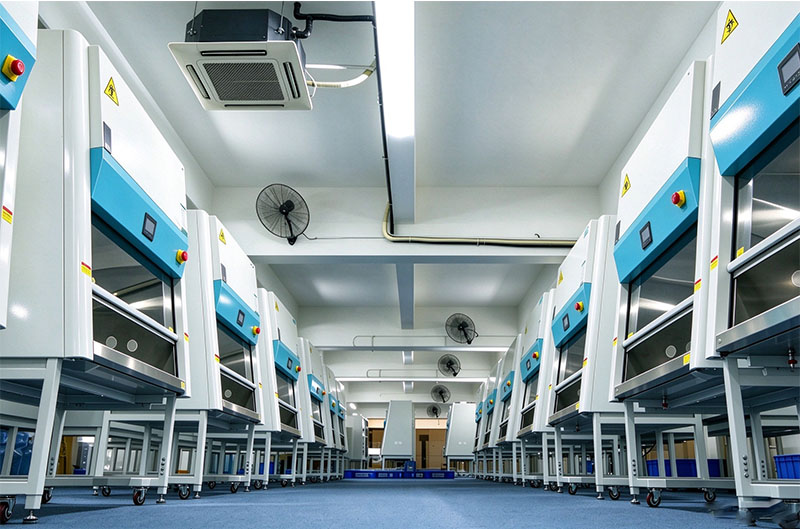
Important Note: A biosafety cabinet (BSC) is NOT the same as a laminar flow clean bench. A clean bench (laminar flow hood) primarily directs a flow of clean air toward the sample; it protects the sample but offers no protection to the operator. In contrast, a biosafety cabinet utilizes negative pressure to draw air inward, with its primary purpose being the protection of personnel. When working with pathogenic microorganisms, infectious agents, or microbial strains/toxins, a biosafety cabinet must be used; a clean bench must never be used as a substitute.
I. Classification and Selection: I, II, and III
Type II is the primary model, with the widest range of applications.
Based on their airflow organization and containment barrier structure, biosafety cabinets (BSCs) are classified into three levels: Class I, Class II, and Class III. Among these, Class II is the primary type most widely used in clinical, pharmaceutical, and disease control applications.
Q: Class I Biosafety Cabinets — Protect the operator and the environment, but not the sample.
A: These cabinets utilize negative-pressure inward airflow at the front opening, with exhaust air filtered through a HEPA filter. While they protect the operator and the surrounding environment, the airflow inside the cabinet is turbulent; therefore, they do not provide sterile, laminar-flow protection for samples. They are suitable for tasks that do not require sample protection but necessitate the containment of aerosols—such as opening containers of microbial cultures, handling general laboratory waste, or providing containment for small pieces of equipment.
Q: Class II Biosafety Cabinets (BSCs) — Triple-Protection, Most Widely Used
A: These cabinets provide triple protection—for personnel, samples, and the environment—and are subdivided into types such as A1, A2, B1, and B2. Class II Type A2 cabinets allow exhausted air to be either recirculated (after HEPA filtration) or vented directly into the room; they are suitable for low-to-moderate risk tasks, including routine microbial culture, sample preparation, and clinical testing, making them the "standard-issue" unit for laboratories. Class II Type B2 cabinets feature nearly 100% total exhaust with no air recirculation and are connected to a dedicated building exhaust system; they are designed for procedures involving small amounts of volatile chemical reagents, trace radioactive materials, or scenarios requiring strict control against cross-contamination. In Class II cabinets, the downward airflow velocity is maintained within a controlled range of 0.25–0.50 m/s. These airflow parameters must be calibrated regularly; any deviation beyond specified limits indicates a failure of the protective barrier.
Q: Class III Biosafety Cabinets (BSCs) — Fully Sealed Glove Boxes, High-Level Protection
A: These cabinets are completely airtight. Operators perform tasks using long-sleeved gloves attached to the cabinet, while samples enter or exit through a double-door interlocked pass-through chamber. All exhaust air passes through multiple HEPA filters (with sterilization capabilities if necessary) before being vented entirely out of the facility. These units are designed for high-biosafety-level laboratories and the handling of highly pathogenic microorganisms.
Protection for personnel only (no product protection) → Class I; standard microbiological work, triple protection, indoor use → Class II, Type A2; handling of volatile chemicals or trace radioactive materials, requiring total exhaust → Class II, Type B2; high-pathogenicity agents, high biosafety level, fully sealed → Class III.
II. Application Scenarios for Biosafety Cabinets
Biopharmaceuticals and Sterile Preparations
Q: Biopharmaceutical and Sterile Preparation Facilities (GMP Environments)
A: Used for processes such as sterile compounding, microbial strain transfer, microbial limit testing, and pre-processing for sterility testing. Equipment must be integrated into the cleanroom’s overall environmental control and validation system, working in tandem with laminar flow hoods, pass-through boxes, isolators, and VHP (vaporized hydrogen peroxide) sterilization systems to form an aseptic assurance chain. A pressure differential of at least 10 Pa must be maintained between the cleanroom and adjacent areas.
Q: R&D and Production of Vaccines, Cell Therapies, and Gene Therapies
A: In processes such as handling vaccine strains, filling cell-based preparations, or expressing and purifying genetically engineered microorganisms, equipment serves a dual purpose: protecting operators from exposure and safeguarding the product against microbial contamination. With the implementation of the *Regulations on the Management of Clinical Research and Clinical Translational Application of New Biomedical Technologies* (State Council Decree No. 818)—effective May 1, 2026—cutting-edge sectors like cell therapy and gene editing have entered a new phase of regulated, legally-governed oversight. Consequently, there are heightened requirements for the compliant configuration and documented validation of biosafety protection equipment in both R&D and production settings.
Q: Hospital Clinical Laboratories and Diagnostic Departments
A: Used for handling specimens such as blood, bodily fluids, and secretions, as well as for bacterial culture, antimicrobial susceptibility testing, and the pre-processing of viral nucleic acid samples. These measures prevent the spread of pathogen-containing aerosols from clinical specimens, thereby protecting laboratory technicians—a role classified as high-risk.
Q: Centers for Disease Control and Prevention (CDC):
A: Used for the isolation and culture of pathogenic bacteria, sample purification, epidemiological specimen testing, and emergency testing during disease outbreaks; these serve as frontline equipment within pathogen surveillance networks.
Q: Environmental Monitoring and Public Health Laboratories:
A: Used for the inoculation and culture of microbial samples from water, air, and soil, while preventing the cross-contamination and spread of environmental strains within the laboratory.
III. Routine Operations and Maintenance
Routine Monitoring
Good Manufacturing Practice (GMP) for medicinal products requires controlled management of dust particles and microorganisms within cleanrooms. Critical protective equipment must be validated, with records of initial validation and periodic re-validation maintained. During unannounced inspections, common findings—which often lead to non-compliance deductions—include: the absence of annual equipment test reports; a lack of leak-test records for filters; uncalibrated airflow velocity drift in fans; missing records of disinfection activities; and unclear integration between equipment and room-level exhaust or pressure-differential control systems.
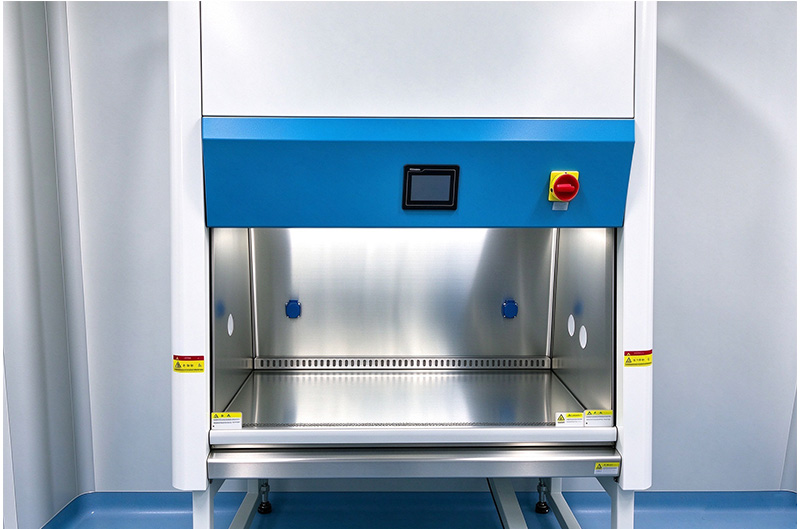
✅Annual Performance Testing: Conduct comprehensive testing—covering inflow velocity, downflow velocity, filter integrity (PAO/DOP leak testing), cleanliness, noise levels, and illuminance—on an annual basis. A formal report must be issued, and continued use is permitted only if the unit passes these tests.
✅Periodic Microbial Monitoring: Perform regular monitoring for settleable and airborne microorganisms in accordance with facility management requirements. Establish trend data and, in the event of abnormal fluctuations, promptly investigate the status of the filters and airflow.
✅Filter Management: Maintain records of initial installation dates, leak test results, and replacement cycles. Replace filters if a pressure differential alarm is triggered or if a leak test fails. Ensure proper containment and disinfection of filters during the replacement process to prevent contamination.
✅Disinfection Before and After Use: Wipe down work surfaces and interior walls with an approved disinfectant before and after each operation. Use UV lamps for the prescribed duration, track their cumulative operating time, and replace them upon reaching the end of their service life.
✅Standardized Operational Practices: Wait for airflow to stabilize after powering on the unit before beginning work. Keep the number of items inside the cabinet to a minimum and ensure that return-air grilles remain unobstructed. Use controlled, minimal movements to avoid creating air turbulence. Disinfect the unit thoroughly after completing operations before powering it down.
✅Documentation and Record-Keeping: Maintain a dedicated file for each unit, consolidating certificates of conformity, factory inspection reports, installation qualification (IQ) documentation, validation reports, annual performance test results, and maintenance/replacement records. Ensure all documentation is readily accessible and traceable for audits or inspections.
