COMPANY NEWS
Filters | A Guide to Standardized Installation and Full-Lifecycle Maintenance
This document aims to strictly implement three core control standards for filters—standardized installation, systematic placement, and compliant storage—while detailing operational procedures and inspection requirements across the entire process. By addressing high-risk issues at the source—such as improper or rough installation, disorganized stacking that leads to crushing, and storage in unsuitable temperature or humidity conditions—it ensures the integrity of filter seals, filtration precision, and structural stability. This approach effectively prevents malfunctions—including leaks, blockages, and physical damage—caused by improper handling, thereby significantly reducing the need for rework, on-site service complaints, and unnecessary loss of consumables, ultimately ensuring the stable and compliant operation of the filtration system over the long term.
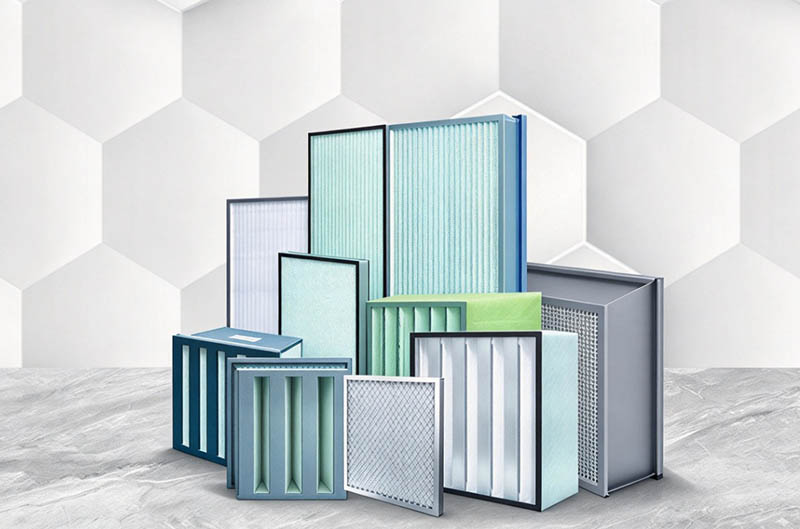
I. Preparation and Precautions for Filter Installation
Handle with Care; Clean and Inspect
✅All steps during the filter installation process must be performed with care; avoid any impacts, as these could damage the filter.
✅Prepare the necessary installation tools, including alcohol, absorbent towels, a stepladder, a utility knife, and a long-shaft screwdriver.
✅Before installing high-efficiency air filters, the cleanroom must undergo a thorough, comprehensive cleaning—an essential step to prevent the filters from becoming contaminated by existing pollutants. This "comprehensive" cleaning must encompass the entire cleanroom facility, including areas such as technical mezzanines or the space above the suspended ceiling, all of which require meticulous cleaning.
✅Once the cleanroom and the purified air conditioning system have been cleaned, the air conditioning system must be test-run for a continuous period of at least 12 hours. Following this, the cleanroom must be cleaned once more; immediately after this final cleaning, the high-efficiency air filters should be installed.
✅During the installation of High-Efficiency Particulate Air (HEPA) or Ultra-Low Particulate Air (ULPA) filters, handle them with care to avoid damage caused by intense vibration or impact.
✅Check the labels on the filters to ensure they match the order number, dimensions, and efficiency ratings specified by the customer.
✅High-efficiency air filters must be unpacked from their internal polyethylene (PE) bags only after the cleanroom has been thoroughly cleaned.
✅Before removing the PE packaging, carefully inspect the exterior of the high-efficiency air filter, paying particular attention to the filter core for any signs of damage or deformation.
✅Regardless of whether the filter is installed using a gasket or a fluid-seal (gel-seal) system, ensure that the mounting frame—including the fluid-seal channel or the gasket contact surface—is wiped completely clean. If a fluid-seal system is used, verify that the fluid level within the channel meets design specifications and ensure that there is no leakage of sealant at the joints of the mounting frame.
✅When installing fluid-seal HEPA filters, it is recommended to limit the number of installation and removal cycles to no more than five. During removal, avoid moving too quickly, as this may cause the gel sealant to adhere to the air outlet, resulting in a loss of sealant material.
II. Scope of Filter Installation Work
Taking the installation of a high-efficiency filter as an example
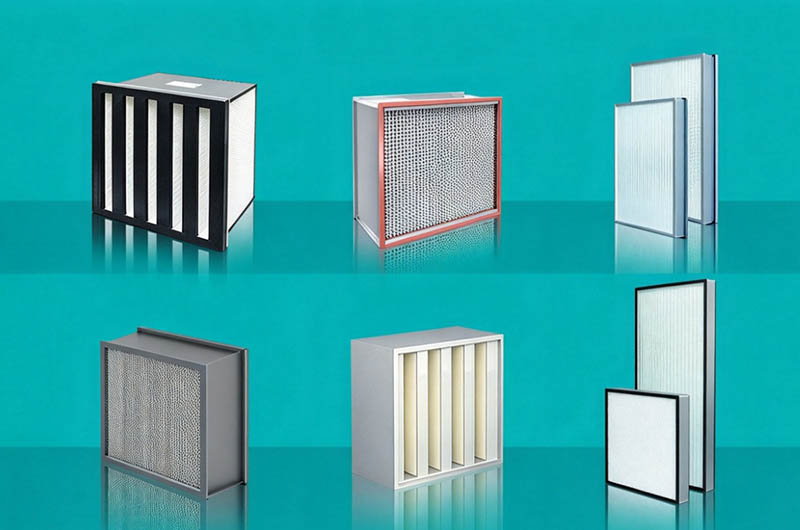
Installation Procedures for HEPA (High-Efficiency Particulate Air) Filters:
✅ Verify the status of the filters (whether they are still in their outer packaging or already unpacked) and ensure they are stored according to the correct orientation shown in the provided illustrations. Report any irregularities to the site supervisor immediately. (Handle with care; do not drop or toss the products, as this can cause the filter media to fracture.)
✅ When unpacking, remove the filter from its container by lifting it out carefully (from top to bottom). Once removed, inspect the packaging for any signs of damage or deformation.
✅ When moving a HEPA filter, always hold it by its frame. (At no point should fingers or sharp objects come into direct contact with the filter media; doing so could damage the media, leading to leaks and rendering the filter unusable. Avoid rough handling—ensure the filter media is protected at all times.)
✅ After unpacking, confirm that the specifications and quantity of the items match the labels on the outer packaging; report any discrepancies to the manufacturer immediately. The arrow on the label affixed to the filter frame must align with the direction of the airflow. Once unpacked, place the filter flat on a workbench for inspection. (At no point should fingers or sharp objects come into direct contact with the filter media; doing so could damage the media, leading to leaks and rendering the filter unusable. Avoid rough handling—ensure the filter media is protected at all times.)
✅ When handling HEPA filters, take care to protect the filter’s sealing gasket. Never allow fingers or sharp objects to come into direct contact with the filter medium; any damage to the medium can cause leaks, rendering the filter unusable. Avoid rough handling—always ensure the filter medium remains protected.
✅ When removing the packaging from a HEPA filter, do not use a knife or blade; instead, tear the packaging open by hand. Never allow fingers or sharp objects to come into direct contact with the filter medium; any damage to the medium can cause leaks, rendering the filter unusable. Avoid rough handling—always ensure the filter medium remains protected.
✅ When installing a HEPA filter, do not position your head against the filter, and do not support it by pushing upward on its protective mesh. Never allow fingers or sharp objects to come into direct contact with the filter medium; any damage to the medium can cause leaks, rendering the filter unusable. Avoid rough handling—always ensure the filter medium remains protected.
✅ When handling and installing HEPA (High-Efficiency Particulate Air) filters, ensure they remain balanced and do not twist them. At no point should fingers or sharp objects come into direct contact with the filter media; any damage to the media can cause leaks, rendering the filter unusable. Avoid rough handling and take great care to protect the filter media.
✅ The number of personnel required for handling depends on the size of the HEPA filter. For instance, filters larger than 1200 x 600 mm require at least two people. Always ensure an appropriate number of personnel are assigned based on the filter's dimensions. (As noted above, never allow fingers or sharp objects to touch the filter media, as damage will lead to leaks and necessitate the disposal of the filter. Avoid rough handling and ensure the filter media is well-protected.)
✅ For the installation of filters into liquid-seal (gel-seal) air outlets: first, spray alcohol inside the plenum box and wipe it clean using a clean cloth. Once the plenum box is clean, inspect the air outlet for any pinholes (small voids or pores). If any pinholes are found—which could cause leaks—they must be immediately sealed using silicone sealant (glass glue).
✅ When installing a HEPA (High-Efficiency Particulate Air) filter, ensure that if it is being installed vertically, the pleats of the filter media are oriented perpendicular to the floor. (At no time should fingers or sharp objects come into direct contact with the filter media; any damage to the media can cause leaks, rendering the filter unusable. Avoid rough handling and take great care to protect the filter media.)
✅ Loosen the screws used to secure the filter to the plenum (ensuring they do not protrude and obstruct the installation). Position the filter’s clamping blocks facing outward and ensure the air outlet positioning blocks are level. Align the filter’s fluid-seal channel with the knife-edge of the air outlet and install it, ensuring there is no misalignment. (At no time should fingers or sharp objects come into direct contact with the filter media; any damage to the media can cause leaks, rendering the filter unusable. Avoid rough handling and take great care to protect the filter media.)
✅ Once the filter is positioned level, proceed to secure it by tightening the screws. Use a socket wrench for this task; the use of an electric impact wrench is strictly prohibited. Do not tighten the screws all the way down—a gap of 1–2 mm must be maintained between the edge of the air vent/opening and the filter flange to ensure a proper seal. The goal is to secure the filter firmly in place without fully bottoming out the screws. (At no point should fingers or sharp objects come into direct contact with the filter media, as this could cause damage, leading to leaks and rendering the filter unusable. Avoid rough handling; the filter media must be carefully protected at all times.)
✅ After all filters have been installed according to the procedures above, the personnel responsible shall collect the product serial numbers and certificates of conformity for each high-efficiency filter. These serial numbers must then be recorded in the "High-Efficiency Filter Installation Verification Checklist," in accordance with the corresponding layout drawings.
III. Storage Guidelines for High-Efficiency Air Filters (HEPA Filters)
Protect the filter element; keep in a dry, temperature-controlled environment.
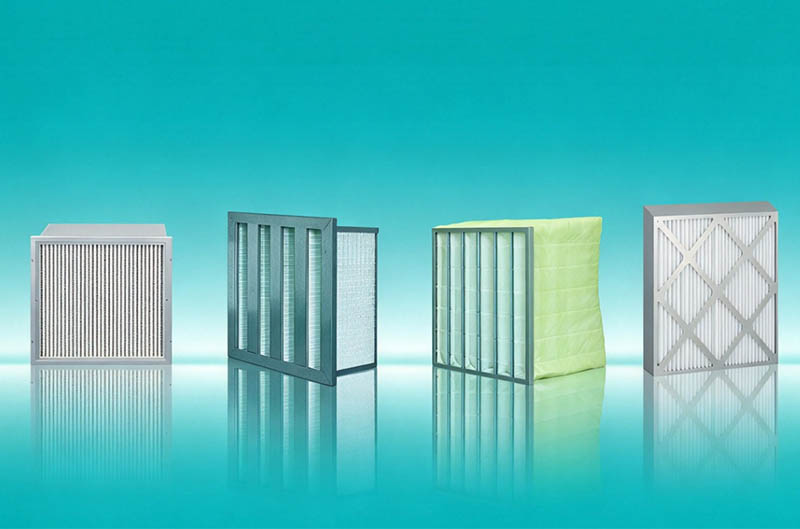
During transport, high-efficiency air filters must be kept in an upright position to prevent damage to the filter core caused by external impact. Adequate protection against rain must also be provided.
Handle with care during transport to ensure the filter core remains undamaged.
When transporting high-efficiency air filters, the stacking height must not exceed 2 meters. Furthermore, no other objects should be placed on top of the packaging, as this could damage the filter—particularly the filter core. In addition to observing height limits, the units must be properly secured to prevent damage to the filter core resulting from vehicle movement or vibration.
When stored in a warehouse (which must be clean and free of dust), the filters should be kept upright and remain in their original packaging. They must be stacked according to the markings on the boxes (with the labels facing upward) on a level surface or pallet. The stacking height must not exceed 2 meters to prevent the filters from tipping over and sustaining damage.
Filters should be stored in a dry, temperature-controlled environment. The warehouse temperature should be maintained between 0°C and 40°C, with minimal temperature fluctuations, and the relative humidity should be kept below 60%. (Storing filters outdoors is strictly prohibited.)
High-efficiency air filters should not be stored for an extended period, as this can compromise the filtration performance of the filter media. For standard gasket-sealed filters, the storage period should not exceed one year. For filters equipped with a gel seal, the recommended maximum storage period is 6 months.
IV. Filter Parameter Comparison Table
Primary-Efficiency Filter / Medium-Efficiency Filter / High-Efficiency Filter
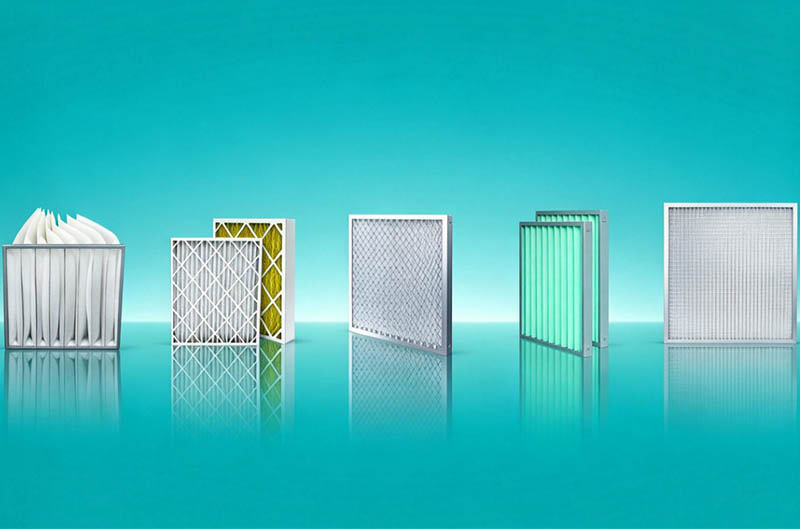
| Preliminary Air Filter Parameter Comparison Table | |||
| Item | Initial-Efficiency Panel Filter | Initial-Efficiency Pleated Filter | Initial-Efficiency Bag Filter |
| Efficiency Grade | G3/G4/M5 | G3/G4/M5 | G3/G4/M5 |
| Frame Material | Double-layer moisture-resistant paperboard frame | Aluminum frame | Aluminum frame / galvanized steel frame |
| Filter Media | Non-woven fabric & synthetic fiber | Polyester synthetic fiber | Man-made fiber |
| Continuous Operating Temperature | ≤ 70°C | ≤ 70°C | ≤ 70°C |
| Initial Resistance (Pa) | 116/78/66 | 75/55/43 | 43/51/60 |
| Final Resistance (Pa) | ≤ 250 | ≤ 250 | ≤ 250 |
| Medium-Efficiency Air Filter Parameter Comparison Table | ||||
| Item | Medium-Efficiency Bag Filter | Medium-Efficiency Separator-Type Filter | Medium-Efficiency Separatorless Filter | Medium-Efficiency V-Bank Filter |
| Efficiency Grade | M5/M6/F7/F8/F9 | M6/F7/F8/F9 | M6/F7/F8 | M6/F7/F8/F9 |
| Frame Material | Aluminum / galvanized steel / plastic frame | Aluminum / galvanized steel / wooden / stainless steel frame | Moisture-resistant paperboard | ABS plastic (galvanized steel frame) |
| Filter Media | Synthetic fiber filter media | Fiberglass filter media | Fiberglass filter media | Moisture-resistant / flame-retardant fiberglass filter media |
| Continuous Operating Temperature | ≤ 70°C | ≤ 70°C | ≤ 70°C | ≤ 70°C |
| Initial Resistance (Pa) | 55/60/80/105/160 | 60/80/105/160 | 103/150/170 | 85/105/125/145 |
| Final Resistance (Pa) | ≤ 250 (M5–M6); ≤ 450 (F7–F9) | 292 mm: ≤ 445 Pa; 150 mm: ≤ 360 Pa | ≤ 380 | ≤ 500 |
| High-Efficiency Air Filter Parameter Comparison Table | ||||
| Item | High-Efficiency Separator-Type Filter | High-Efficiency Separatorless Filter | Liquid Tank High-Efficiency Filter | Integrated Air Outlet High-Efficiency Filter |
| Efficiency Grade | H13/H14 | H13/H14/U15/U16 | H13/H14/U15/U16 | H13/H14/U15/U16 |
|
Frame Material
|
Galvanized steel / stainless steel | Aluminum profile | Aluminum profile | Aluminum profile |
| Filter Media | Moisture-resistant, flame-retardant fiberglass filter media | Ultra-fine fiberglass filter paper | Ultra-fine fiberglass filter paper | Ultra-fine fiberglass filter paper |
| Sealant | Polyurethane | Polyurethane | Polyurethane | Polyurethane |
| Continuous Operating Temperature | ≤ 70°C | ≤ 70°C | ≤ 70°C | ≤ 70°C |
| Initial Resistance (Pa) | 248/302/352/402 | 110/115/130/145 | 100/105/120/135 | 130/140/150/160 |
| Final Resistance (Pa) | ≤ 800 | ≤ 500 | ≤ 500 | ≤ 400 |
This filter must be maintained and kept by professionally trained personnel.
Filters should be replaced periodically—typically every 3–6 months for primary and medium-efficiency filters, and every 12–18 months for high-efficiency (HEPA) filters—depending on the required cleanliness standards of the environment.
The service life of a filter is determined by its resistance; if the resistance exceeds the specified standard—taking into account the filter's type (primary, medium, or high-efficiency) and its rated efficiency—it should be discarded.
The cleanliness level of the controlled environment should be monitored periodically (generally every two to three months) using a particle counter. If the actual cleanliness level fails to meet the required standards, the cause must be investigated (e.g., checking for leaks or potential failure of the high-efficiency filter). If a high-efficiency filter is found to be ineffective, it must be replaced with a new one.
Depending on actual usage, the filter media within the primary air filter should be removed and cleaned periodically (typically once every two to three months).
If a decrease in airflow velocity is observed, first check the surface of the primary air filter for any darkening. Darkening indicates that the pre-filter has accumulated a significant amount of dust, resulting in increased resistance; in such cases, the non-woven fabric within the primary air filter should be removed for cleaning or replacement.
If the airflow velocity does not improve after cleaning or replacing the non-woven fabric, it indicates that the high-efficiency air filter (HEPA filter) is clogged, causing increased resistance; the high-efficiency air filter should then be replaced.
Before replacing any filter, ensure the unit is powered off. Use a new filter that matches the specifications and model of the original. During installation, pay attention to the arrow marked on the filter label—the arrow must point in the direction of the airflow—and ensure a proper seal to prevent any leakage.
After the high-efficiency filters have been replaced, verify that there are no leaks around the frames. Conduct testing using a particle counter; normal operation may only resume once the technical specifications are met.
V. Advantages of AN Company Filters
Strong brand reputation, comprehensive after-sales service, and support for customization.
Q: How does Company AN provide a definitive solution to sealing challenges?
A: By utilizing its proprietary, patented liquid-channel sealing technology. This approach replaces traditional, prone-to-aging-and-cracking gasket seals with a liquid sealant that forms a seamless bond with the frame, achieving a sealing efficiency of over 99.99%. Even under conditions of temperature fluctuation or high-frequency equipment vibration, the air bypass leakage rate remains below 0.1%—perfectly meeting the contamination-prevention requirements for high-risk cleanrooms under GMP standards.
Q: Is installation difficult or prone to errors? How do you prevent post-sales issues caused by human error?
A: We utilize a standardized, modular, and minimalist design. Our products are natively compatible with the entire range of AN’s proprietary cleanroom equipment—including VHP pass-through chambers, FFUs, and laminar flow hoods—requiring no modifications thanks to universal interfaces. We provide official, standardized protocols for installation, positioning, and storage, along with practical guidance on PAO leak testing. The design ensures easy alignment and assembly/disassembly, effectively eliminating risks such as installation misalignment or seal failure, thereby significantly reducing the need for post-sales repairs.
Q: Are the products compliant enough to easily pass strict industry audits?
A: Our entire product line is fully compliant, traceable, and requires zero rectification. All filters strictly adhere to mandatory GMP and ISO cleanroom standards. Each unit undergoes 100% performance testing before leaving the factory and comes with an authoritative third-party test report. Comprehensive records—covering core data such as filtration efficiency, leak rates, and material resistance—are maintained, ensuring a smooth audit process for pharmaceutical companies, medical laboratories, and similar facilities.
Q: How competitive are the filtration performance specifications compared to high-end industry standards?
A: We offer a comprehensive range of high-precision filtration systems. Our flagship gel-seal HEPA filters reach H13/H14 grades, achieving 99.99% filtration efficiency for 0.3μm particles. Our chemical filters provide ≥95% purification efficiency for VOCs and acidic/alkaline gases. Additionally, our sintered stainless-steel filter elements combine high flow capacity with low pressure drop, precisely capturing contaminants ranging from dust particles to molecular-level pollutants—making them ideal for demanding cleanroom environments.
Q: Does AN Company offer customized solutions?
A: Yes. As a professional manufacturer of cleanroom and sterilization equipment, AN can customize filters to meet specific client requirements, ensuring a perfect fit for various applications and providing a comprehensive, one-stop filtration system solution.
Q: What kind of supporting services does AN provide?
A: We offer end-to-end services, covering design, manufacturing, installation, commissioning, and validation. Our professional technical team is ready to respond quickly to client needs and resolve any technical issues that may arise during equipment operation.
