COMPANY NEWS
Standard Operating Guidelines for Grade A Laminar Flow Hoods (GMP-Compliant Version)
Grade A laminar flow hoods serve as the primary protective measure for high-risk processes such as aseptic filling, temporary storage of rubber stoppers, and aseptic connections. While many production facilities pass their initial hardware qualification, they often falter during routine operations—due to issues like obstructed airflow, insufficient self-purification time, incorrect disinfection sequences, or excessive particle counts during active operations. This article provides a practical, ready-to-implement standard operating guide for Grade A laminar flow hoods. It covers pre-start checks, start-up self-purification, operational protocols, cleaning and disinfection, shutdown procedures, routine monitoring, handling of anomalies, and periodic validation—making it an ideal resource for staff training and the development of Standard Operating Procedures (SOPs).
I. Scope of Application (Personnel)
Prerequisites
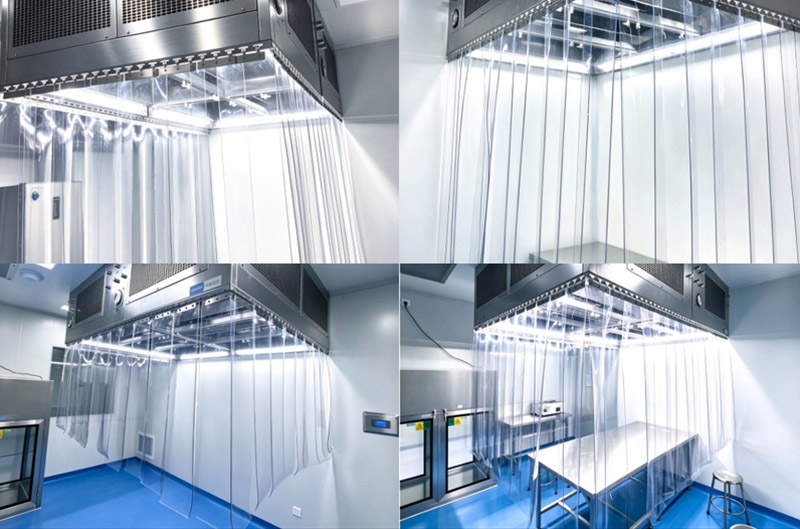
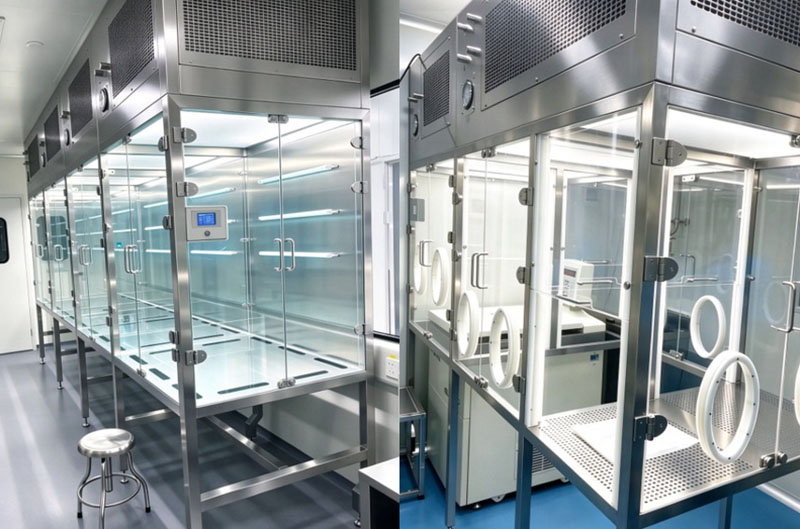
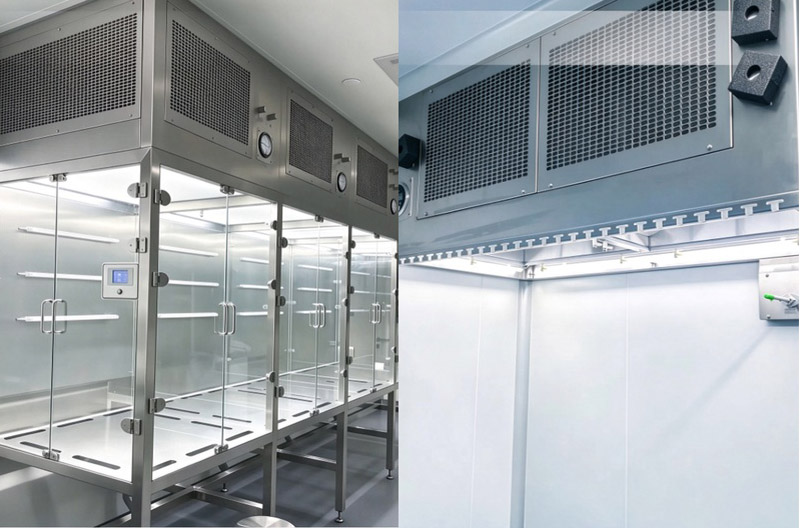
This guide applies to Grade A laminar flow hoods (vertical unidirectional flow) used in pharmaceutical aseptic production areas, including those for biological agents, antibody-drug conjugates (ADCs), and radiopharmaceuticals. It covers integrated laminar flow units featuring either soft or hard enclosures.
⚠️ Note: A Grade A laminar flow hood is designed to protect the product; it is not equivalent to a biosafety cabinet (which protects personnel). The operational protocols for these two types of equipment must not be conflated or used interchangeably.
Personnel Prerequisites:
Operators must wear attire compliant with Grade B/A cleanroom requirements, including sterile garments, hairnets, face masks, and sterile gloves; the wearing of jewelry is prohibited.
Perform hand sanitization before entering the area. Move deliberately; avoid sweeping arm gestures or rapid, sudden turns.
Personnel must complete training on operating under a laminar flow hood and on aseptic processing; they must be familiar with alarm definitions and emergency procedures.
Individuals suffering from a cold, having skin lesions, or exhibiting signs of infection are prohibited from entering areas adjacent to Grade A zones.
II. Pre-startup Checks
Environmental and Hardware Inspection
✅ Environmental Inspection
Ensure no debris is stored around the laminar flow hood. Keep adjacent doors and pass-through hatches closed to prevent pressure differential instability or backflow of air.
Check that enclosures and soft curtains are free from damage, cracks, or delamination; ensure soft curtains show no signs of aging, stickiness, or punctures.
Verify that work surfaces and the area beneath the air-distribution screen (diffuser screen) are free of residual materials, debris, or stains.
✅ Equipment Hardware Inspection
Confirm that power supplies and control circuits are intact, and that emergency stop buttons are reset.
Verify that pressure differential gauges/sensors are functioning correctly, and ensure that the recorded pressure differentials for primary and HEPA filters are within their valid monitoring period.
Check that the fan operates without abnormal noise or vibration; ensure that audible and visual alarm systems are functional.
For integrated units, verify that interlocks, power-loss alarms, and process-linked signals are operating correctly.
✅ Documentation Verification
Confirm that the previous usage record, cleaning record, and validation status labels are current and valid; ensure there are no "Awaiting Repair" or "Awaiting Leak Test" tags present.
III. Pre-operation Self-Cleaning and Operational Procedures
Key Compliance Points
Switch on the main power supply and activate the fan unit. If UV disinfection is required, turn on the UV lamps simultaneously (UV is intended solely for the disinfection of static surfaces; it must be switched off during active operations).
Allow for a continuous self-cleaning period of ≥30 minutes. Once the airflow and pressure differential have stabilized, turn off the UV lamps.
Following the self-cleaning phase, disinfect the lower surface of the air-distribution screen, the inner sides of the enclosure curtains, and the work surface. Use 75% ethanol or an approved sporicidal agent, wiping in a top-to-bottom and inside-to-outside sequence. Ensure the disinfectant used aligns with the facility’s approved cleaning validation list.
Verification: Production operations may commence only after confirming that air velocity, pressure differential, and static airborne particle counts meet the required specifications.
⚠️ Critical Note: Do not begin operations after only a few minutes of self-cleaning! If the airflow has not stabilized, turbulence or eddies may form, likely causing static particle counts to exceed limits—a frequent deficiency cited during unannounced regulatory inspections.
Operational Standards for Grade A Zones
Work Area: All exposed sterile materials must be handled within the "First Air" zone (the area directly receiving filtered, unidirectional airflow).
Placement of Items: Keep materials and tools as low as possible. Do not stack items so high that they obstruct the overhead air supply. Avoid placing large quantities of materials directly beneath HEPA/ULPA filters, as this disrupts the unidirectional airflow.
Arm Movements: Perform all movements slowly and steadily. Avoid reaching laterally across the Grade A airflow, and do not keep arms suspended over open containers for extended periods.
Material Transfer: Introduce materials through openings in the side curtains to minimize disturbance to the primary airflow. Do not reach into the zone from above or behind the laminar flow hood.
Avoid any activities that generate dust, such as vigorous wiping or sweeping, within the Grade A zone.
Personnel Positioning: Do not stand too close to the curtain openings, and avoid breathing or speaking directly toward the air supply outlets.
⚠️ Do not store cleaning tools or waste bags inside the laminar flow hood.
⚠️ Do not remove or lift the flexible enclosure curtains.
⚠️ Avoid having multiple personnel perform overlapping tasks simultaneously within a confined Grade A zone.
⚠️ Do not alter the fan frequency or modify air velocity settings without authorization. Cleaning Between Operations and Continuous Monitoring
At the end of each batch or when switching product types, promptly clear waste from work surfaces and re-disinfect the surfaces.
Conduct in-process sampling for particles and microorganisms in accordance with the facility’s monitoring plan, and record dynamic data in real time.
If materials are spilled or liquid products splash onto work surfaces, immediately pause open-process operations, perform localized disinfection, and assess whether an extended self-purification (recovery) period is required.
Rotate the disinfectants used and periodically apply a sporicidal agent to prevent the development of microbial resistance.
Shutdown Procedure
Ensure all aseptic open-process operations are complete and all open containers are sealed; remove all materials and equipment.
Thoroughly clean and disinfect the interior surfaces of the laminar flow hood.
Once cleaning is confirmed, turn off the fans and lighting; for long-term shutdowns, the main power supply may also be switched off.
IV. Operation, Maintenance, and Handling of Abnormalities
Common Abnormalities and Emergency Response
Daily: Record pressure differential readings, perform visual inspections, and maintain cleaning logs.
Weekly: Inspect the integrity of soft curtains and test alarm functions.
✅Periodic Inspections
Air velocity uniformity test: 0.36–0.54 m/s at a position 100–150 mm below the air distribution screen (diffuser plate).
HEPA/ULPA filter integrity testing (PAO leak test): Ensure the leak rate is within acceptable limits and the filter is free of leaks.
Airflow visualization (smoke pattern test).
Verification of self-purification (recovery) time; monitoring of airborne particles and settleable microorganisms.
Clean or replace primary (pre-) filters; replace HEPA/ULPA filters when the pressure differential reaches the upper limit—following any replacement, the filter must undergo integrity (leak) testing and air velocity measurement.
✅Common Anomalies and Emergency Responses
Rapid increase in pressure differential: Indicates dust accumulation in filters; prioritize inspection of the primary (pre-) filters. If the pressure differential exceeds specified limits, Grade A operations must not continue.
Low or uneven airflow velocity: Potential causes include fan failure, leaks in HEPA/ULPA (high-efficiency) filters, or blockage of the air distribution/diffuser screen. Halt operations to investigate.
Sudden exceedance of particle count limits (during dynamic conditions): Prioritize checking for personnel movement, obstruction by materials, disturbances from nearby door openings, or air leakage through gaps in the enclosure. Suspend open-process operations, identify the root cause, and implement corrective actions.
Fan power failure/shutdown: Triggers an audible and visual alarm; Grade A protection is compromised. Immediately cease all aseptic open-process operations and manage product risks in accordance with the Standard Operating Procedure (SOP).
Damage to soft curtains (curtain partitions): Immediately take out of service, mark as isolated, replace the curtain, and re-verify the airflow pattern.
