COMPANY NEWS
A One-Minute Guide to the Structure and Application Scenarios of High-Efficiency Air Supply Outlets
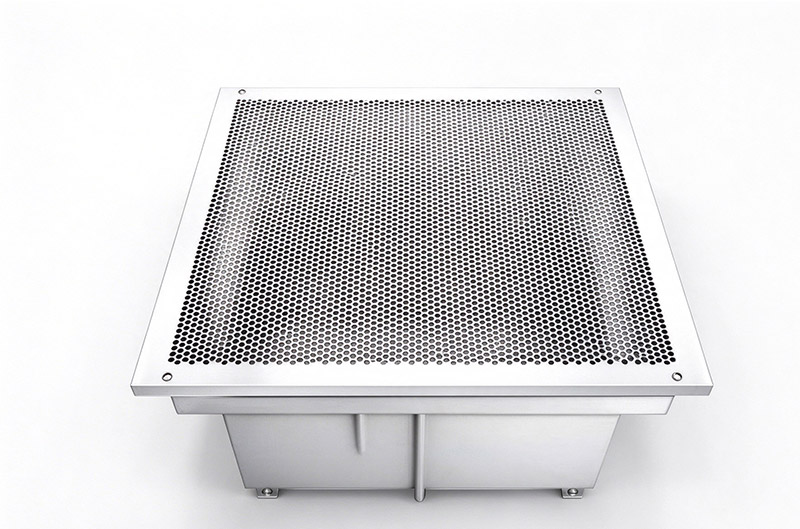
The liquid tank sealed high-efficiency filter air supply outlet is a liquid tank high-efficiency air supply outlet with a replaceable high-efficiency filter, specially designed for the air supply end of biological clean rooms. It has complete functions and fully complies with the verification and testing requirements of pharmaceutical regulatory agencies. It is widely used by well-known pharmaceutical companies. The box body can be made of electrostatically sprayed cold-rolled steel plate or stainless steel. The product is beautiful and has strong corrosion resistance. The liquid tank sealing design further ensures its sealing.
The lower fine-adjustable high-efficiency air supply vent is a high-efficiency air supply vent with a replaceable high-efficiency filter. It is widely used in hospitals, biopharmaceuticals, semiconductors, liquid crystal manufacturing, precision machinery, optics and other technical fields.
I. Structural Composition of High-Efficiency Air Supply Outlets
High-Efficiency Filters and Sealing Structures
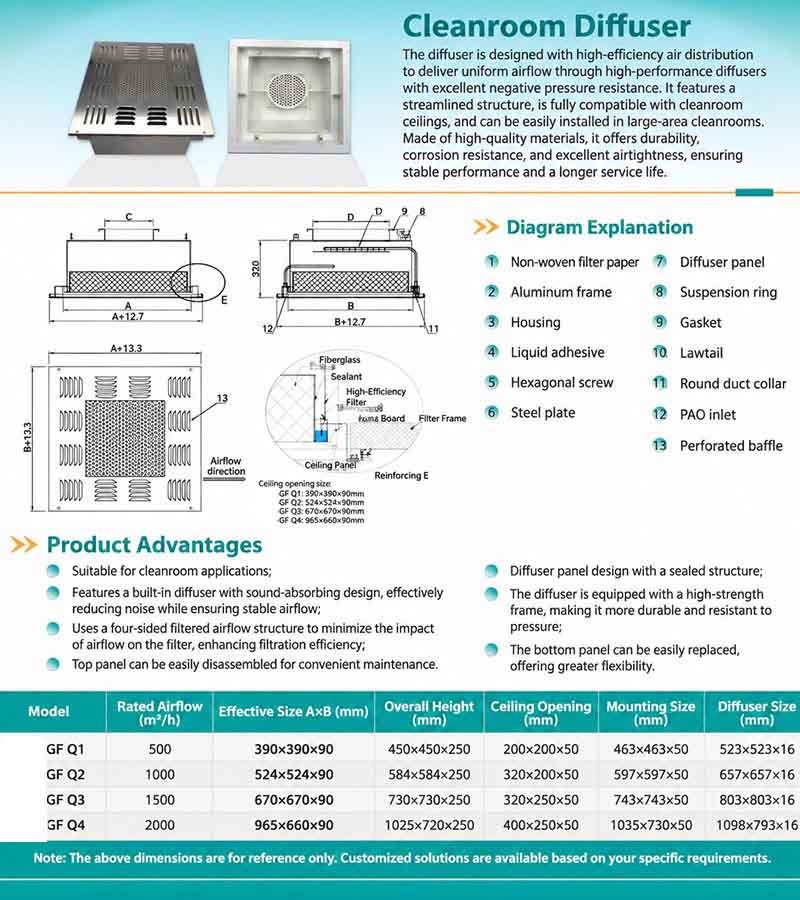
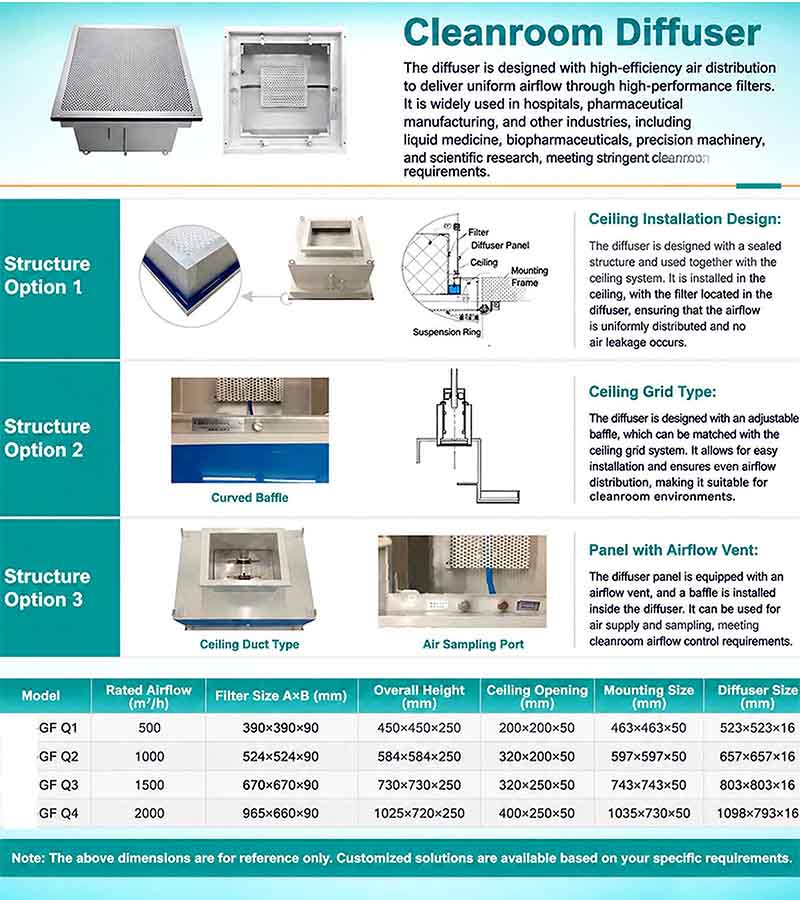
The purification capability of a high-efficiency air supply outlet lies within its precise structural design. It comprises four core components that work in synergy—each essential—to deliver a triple guarantee: "high-efficiency filtration, stable air supply, and zero leakage." Every component has its own specific function:
Q: High-Efficiency Particulate Air (HEPA/ULPA) Filter
A: This serves as the "heart" of a high-efficiency air supply unit and acts as the critical line of defense against contamination. Utilizing ultra-fine glass fiber or PTFE membrane as the filter medium, these filters are categorized into HEPA and ULPA grades. HEPA filters capture at least 99.97% of particles measuring 0.3 microns, while ULPA filters offer even higher precision, capturing at least 99.999% of particles as small as 0.12 microns—meeting the requirements of more stringent cleanroom environments. Depending on the application, they are available in three configurations: separator-style, separatorless, and gel-seal (liquid-trough) types. The gel-seal type, which employs a sealant to ensure zero leakage, is the standard choice for high-risk environments such as biosafety laboratories and operating rooms.
Q: Static Pressure Plenum (Static Pressure Box)
A: Functioning as an "airflow buffer chamber" for the air supply unit, this component is typically constructed from cold-rolled steel or stainless steel, with a powder-coated or baked-enamel finish for corrosion resistance and an aesthetic appearance. Its primary purpose is to decelerate and buffer high-velocity airflow arriving from the ductwork, converting dynamic pressure into static pressure. This creates a uniform and stable pressure field within the plenum, preventing direct, high-velocity airflow from overloading specific areas of the filter, thereby protecting the filter and extending its service life. Some models include an internal insulation layer to minimize the impact of ambient temperature on the supply air, ensuring consistent delivery.
Q: Diffuser Panel
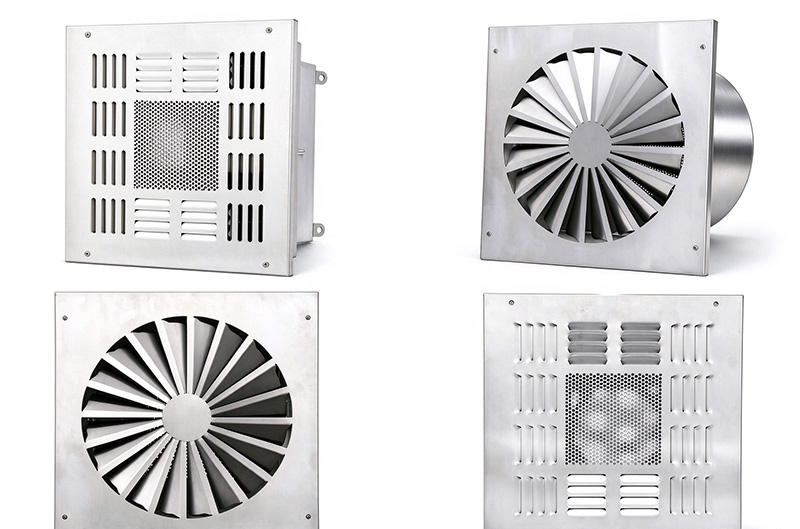
A: This component is responsible for distributing filtered, clean air evenly throughout the target space, preventing localized high-velocity airflow or the formation of "dead zones" (areas with no airflow). Typically made from powder-coated aluminum, cold-rolled steel, or stainless steel, these panels come in various designs, including perforated, louvered, and swirl-type configurations. Convex perforated panels, in particular, offer superior diffusion, ensuring that clean air smoothly reaches every corner—an ideal solution for non-unidirectional (turbulent) flow cleanrooms, where cleanliness is maintained through the principle of "dilution." Notably, louvered diffuser panels allow for flexible adjustment of the air supply angle, preventing direct airflow onto personnel or sensitive precision equipment.
Q: Sealing Structure
A: This is the key to preventing "secondary contamination." By employing dry sealing, wet sealing, or a combination of both, the design ensures a seamless, zero-leakage connection between the filter and its frame. It is important to note that even the slightest amount of unfiltered air bypassing the filter can compromise an entire clean environment—for instance, air leakage in a hospital operating room could increase the risk of post-operative infections, while leakage in an electronics manufacturing facility could lead to a lower yield of functional microchips. Gel-seal (liquid-seal) air supply units, which utilize a sealing gel within the frame, achieve near-perfect, zero-penetration sealing—a critical requirement for high-cleanliness environments.
II. Core Advantages of High-Efficiency Air Supply Units
High-Efficiency Filtration and Uniform Air Distribution
4 Key Advantages
01: High-Efficiency Filtration for Guaranteed Cleanliness
The integrated high-efficiency filter meets ISO 14644-1 standards, effectively capturing dust, bacteria, microorganisms, and other contaminants. By ensuring the quality of the supplied air at the source, it serves as a "hard requirement" for cleanrooms to achieve their designated cleanliness class.
02: Uniform Air Distribution with No Dead Zones
Through the synergistic design of a plenum (static pressure box) and a diffuser plate, clean air is transformed into a low-velocity, uniform airflow that covers the entire target area. This eliminates turbulence and dead zones, ensuring that every part of the space meets the required cleanliness standards.
03: Energy-Efficient, Quiet, and Highly Adaptable
An optimized flow-path design reduces air resistance and lowers fan energy consumption. Some models incorporate sound-absorbing materials, keeping operating noise below 50 dB(A)—or even as low as 35 dB(A)—making them well-suited for noise-sensitive environments such as hospital wards and offices.
04: Easy Maintenance and Controllable Costs
Available in both replaceable-filter and disposable (single-unit) configurations, the replaceable-filter type allows for the filter to be removed and swapped out individually, reducing long-term operational costs. Furthermore, the streamlined structural design facilitates easy daily cleaning and maintenance; regular inspections and filter replacements are all that is needed to maintain stable, long-term performance.
III. Application Scenarios for High-Efficiency Air Supply Outlets
Pharmaceutical and Electronics Sectors
Q: Pharmaceutical Sector
A: Hospital operating rooms, ICUs, pharmaceutical manufacturing workshops, and biological laboratories are the primary application environments for high-efficiency air supply outlets. Operating rooms utilize H13–H14 grade high-efficiency filters, often featuring a fluid-seal (gel-seal) design, to maintain ISO Class 5 cleanroom standards and reduce the risk of post-operative infections. In pharmaceutical production, areas such as filling lines and dry-heat sterilization ovens require high-temperature-resistant air supply outlets—typically constructed from stainless steel—to comply with GMP certification requirements and ensure that pharmaceutical production remains free from contamination.
Q: Electronics Sector
A: The electronics industry—including chip manufacturing and the production of optical components—demands exceptionally high levels of air cleanliness. The density and filtration grade of the air supply outlets directly influence chip yield rates. These environments typically employ ULPA-grade filters to prevent dust and static electricity from interfering with precision manufacturing processes. Furthermore, these units are designed to integrate with color-steel panel ceilings, accommodating the specific layout requirements of the production facility.
Q: Food Industry
A: In aseptic packaging areas for baked goods, dairy products, and prepared foods, high-efficiency air supply outlets effectively capture airborne mold and bacteria, preventing food contamination. Such facilities generally utilize a combination of pre-filtration and high-efficiency filtration. In some cases, fabric air ducts are used; these are easy to clean and help enterprises meet food safety regulations.
IV. Selection Guide
Matching to Your Needs
Selection Tips:
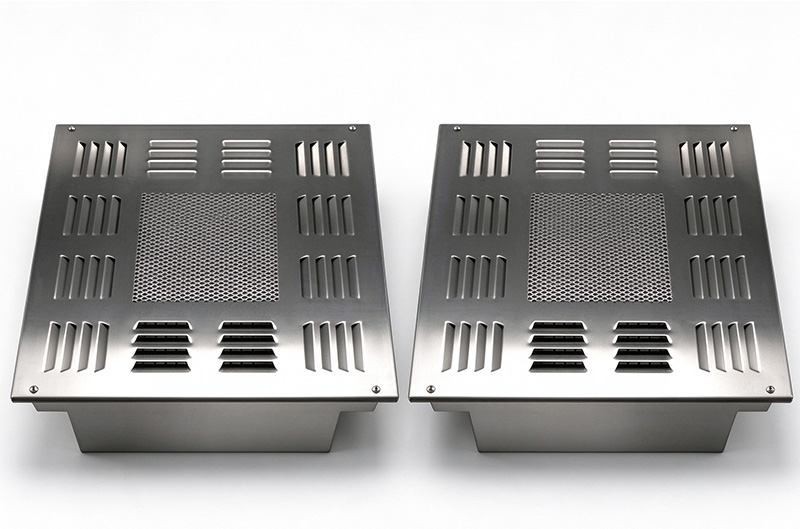
✅ Consider Cleanroom Class: For Class A/B cleanrooms (e.g., operating rooms, semiconductor fabrication facilities), select ULPA-grade filters; for Class C/D, choose HEPA-grade filters.
✅ Consider Installation Space: For low ceiling heights, opt for slim or ultra-slim air supply units. In new construction or areas with high ceilings, top-inlet air supply units are suitable, while side-inlet units are ideal for retrofitting existing facilities.
✅ Consider Airflow Requirements: Calculate based on room area and air change rates; common specifications include 500 m³/h, 1000 m³/h, and 1500 m³/h.
✅ Consider Environmental Conditions: In humid environments (e.g., food processing plants), choose units with stainless steel housings; in corrosive environments, select models with specialized protective coatings.
Maintenance:
✅ Regular Monitoring: Check the differential pressure gauge weekly. Replace the high-efficiency filter promptly when the final resistance reaches twice the initial resistance.
✅ Proper Replacement: Wear protective gear when replacing filters. Perform the replacement outside the cleanroom to prevent contamination. Before installation, inspect the sealing gasket on the new filter to ensure it is free of damage.
✅ Routine Cleaning: Wipe the surface of the air supply unit and the diffuser plate monthly using a lint-free (cleanroom-grade) cloth to prevent dust accumulation from affecting airflow efficiency. Regularly clean the static pressure plenum to inhibit bacterial growth.
