COMPANY NEWS
Standard Operating Guide for Negative-Pressure Weighing Booths | GMP-Compliant Version
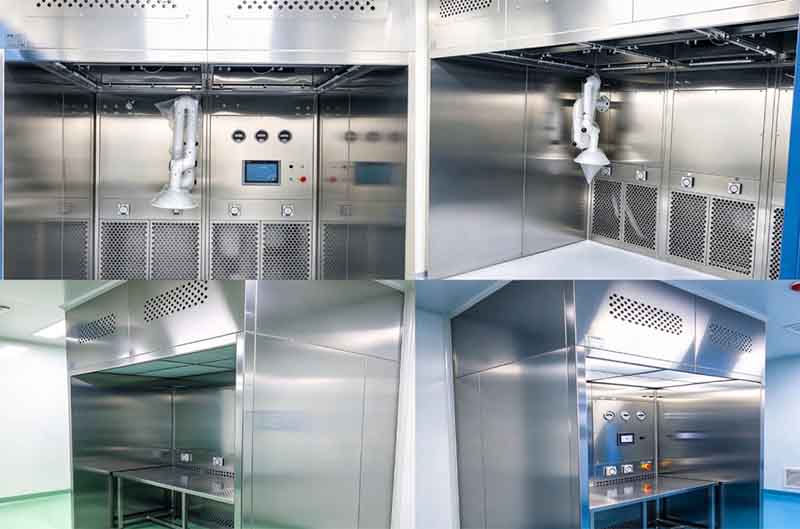
A negative-pressure weighing booth (or enclosure) is a localized, controlled, and contained weighing facility. It utilizes an airflow design featuring a top-mounted HEPA-filtered vertical unidirectional (laminar) air supply, lower side-wall air returns, and a metered exhaust system. Clean, filtered air flows downward across the weighing area, continuously capturing and removing any dust generated during the weighing process. A portion of the circulating air is constantly exhausted, maintaining a stable, slight negative pressure within the weighing zone relative to the surrounding cleanroom. This creates an inward-flowing air barrier that prevents dust from escaping into the external environment, thereby simultaneously ensuring product protection, personnel safety, and the prevention of cross-contamination.
I. Personnel Qualifications and Protection Requirements
Air Showers, BIBO, Pass-Through Boxes, and Laminar Flow Hoods
Personnel must complete training—covering this SOP, GMP fundamentals, dust hazards, and emergency response—and pass the associated assessments before being authorized to work. Handling highly potent, sensitizing, or toxic materials requires additional, specialized risk-assessment training.
When entering cleanroom areas, personnel must wear appropriate cleanroom attire, including a one-piece cleanroom suit, a cleanroom cap, anti-static cleanroom shoes, and lint-free nitrile gloves. For highly potent or sensitizing materials, additional personal protective equipment (PPE)—such as respiratory protection, safety goggles, or face shields—must be worn as required.
Bringing mobile phones, writing materials (paper and pens), or personal belongings into the weighing area is strictly prohibited. Operations must be performed with steady, controlled movements to minimize airflow disturbance. Eating, drinking, engaging in conversation, or placing unrelated items within the weighing room is not permitted.
Implement dedicated management and zoned usage: separate weighing stations must be used for materials with different activity levels or categories (such as highly sensitizing substances like penicillins). The use of the same station for different types of products is strictly prohibited to prevent cross-contamination.
II. Pre-operation Checks
Power-on Pre-check
Q: Environmental and Visual Inspection
A: The interior walls, work surface, air distribution screen, and air return vents of the weighing booth must be free of dust accumulation, residual materials, and visible stains. The record of the previous area clearance must be verified, and the "cleared" status label must be within its validity period.
The sealing strips on door frames, observation windows, and access ports must be intact, with no signs of cracking, deformation, or detachment. Doors must open and close smoothly without sticking.
Associated equipment—including electronic balances, transfer containers, sampling scoops, and anti-static tools—must be clean, in good condition, and within their valid calibration/verification period. The leveling bubble on the electronic balance must be centered.
The surrounding area must be free of obstructions; blocking the air supply surfaces, air return vents, or exhaust vents is strictly prohibited. The area around the weighing booth must be protected from strong airflow interference (such as direct drafts from fans or frequent door opening).
Q: Pre-operation and Parameter Verification
A: Turn on the main power supply and activate the fan and the automated control system; the equipment will then enter its operational state. Allow the system to stabilize for 15–20 minutes; weighing operations may only commence once the airflow and pressure differentials have reached a stable state.
Verify key parameters on the control panel/differential pressure gauges, including negative pressure, laminar airflow velocity, and the pressure differentials across each stage of filtration. Ensure there are no active alarms for pressure differential deviations, fan malfunctions, or filter clogs.
Check alarm functions: Alarm functions for pressure differential limit violations must not be manually disabled or bypassed; doing so is classified as a frequent GMP deficiency.
Verify exhaust system interlocks: The exhaust fan must be interlocked with the main fan; the system must be configured to either shut down or trigger an audible and visual alarm in the event of an exhaust system failure.
Simultaneously verify temperature, humidity, and room pressure differentials to prevent environmental fluctuations from compromising weighing accuracy or airflow stability.
Q: Criteria for Determination
A: If the negative pressure falls outside the range specified in the documentation, the air velocity exceeds the limit, the filter pressure differential exceeds the upper limit, or there are abnormal noises or vibrations, then charging and weighing are prohibited. The equipment must be shut down immediately, and the issue must be reported to the Equipment Department and QA.
III. Standard Operating Procedure for Weighing
Prohibitions and Key Precautions
Q: Material Verification
A: Verify the material name, batch number, specifications, quantity, and status label against the production order and material requisition form. Ensure the outer packaging of the material is intact; if necessary, clean and disinfect the exterior of the packaging before transferring it into the weighing room.
Q: Material Transfer
A: Open the weighing chamber door slowly and keep it open for the shortest time possible. Observe the inward-compensating airflow at the doorway to ensure no dust escapes. Place materials and containers steadily into the chamber, close the door promptly, and wait for the negative pressure to return to the specified range.
Q: Balance Preparation
A: Position the balance within the effective laminar airflow zone, away from the return-air boundary. Power on the unit, allow for warm-up, and tare the balance. Perform calibration before conducting high-precision weighing.
Q: Weighing Operations
A: Perform all movements gently. Add materials, scrape powders, and transfer items slowly; avoid rapid dumping or vigorous shaking of powders to minimize dust generation. Clean weighing equipment after each material is processed; use clear labeling to distinguish items and prevent cross-contamination.
Q: Process Monitoring
A: Regularly monitor negative pressure and airflow velocity during operations. If the negative pressure rises continuously or an alarm is triggered, cease all operations and material transfers immediately. Securely seal the materials and do not resume work until the fault has been investigated and verified as resolved.
Q: Data Recording
A: Record weighing data, material batch numbers, equipment parameters, operator details, and timestamps in real-time. Ensure original records are clear and traceable; alterations, retroactive entries, or pre-filling of data are strictly prohibited.
Q: Completion of Weighing
A: Seal and package materials, then apply appropriate labels—ideally, complete the tying or sealing of bags while still inside the chamber. Remove materials and tools from the weighing chamber one by one, keeping the door open for the minimum time necessary.
⚠️ Prohibitions:
Do not perform high-dust-generating processes—such as pulverizing, sieving, or vigorous mixing—inside the negative-pressure weighing chamber.
Do not lean against or compress the laminar flow distribution screen; do not touch the HEPA filter surface with hard objects.
Do not modify PLC settings for airflow or negative pressure without authorization; any parameter changes must undergo a formal change control and validation approval process.
IV. Cleaning and Maintenance
Routine Maintenance Guidelines
Adhere to a "clean after every batch and every shift" policy. Cleaning shall be performed by the operator and verified by Quality Assurance (QA). The area must be cleared and approved before the next batch can be weighed.
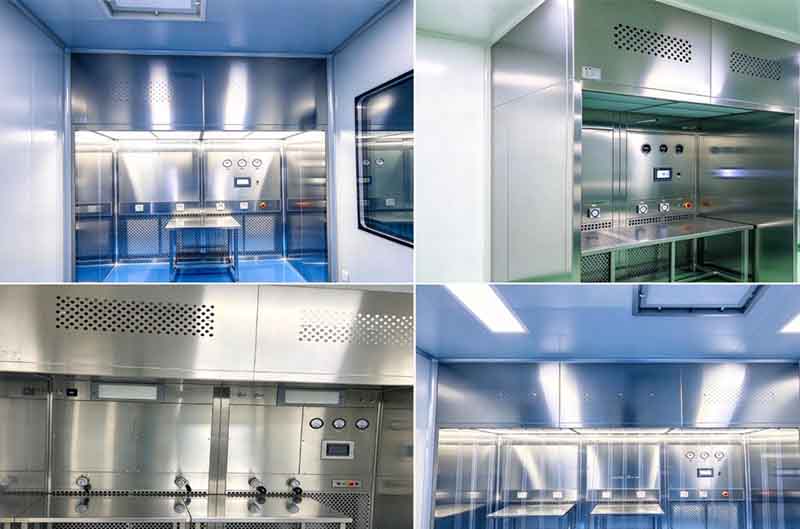
✅ Pre-collection within the chamber: Use lint-free wipes and specialized anti-static vacuum equipment to collect loose dust from surfaces such as tabletops, side walls, and support structures; ensure that dust collection containers remain sealed.
✅ Wipe-down cleaning: Clean in a top-to-bottom direction, moving from the cleanest areas toward more contaminated zones. Standard cleaning agents include purified water and 75% ethanol; select validated cleaning agents based on the solubility and compatibility of the materials involved. Do not use strong acids or bases directly on the chamber, filter membranes, or seals.
✅ Cleaning of tools: Remove items such as weighing scoops and material containers, then clean, dry, and store them in a designated cleaning area; ensure proper labeling for each zone.
✅ Cleaning verification: Perform a visual inspection to confirm the absence of any visible material residue. For highly potent materials, conduct residue testing via swab sampling if necessary.
✅ Documentation: Record the cleaning method, cleaning agents used, time of cleaning, and verification results. Obtain a signature from Quality Assurance (QA) and affix a "Cleaned" status label.
✅ Shutdown: Once cleaning is complete, the equipment may be left running while empty for a period to facilitate self-cleaning. After confirming there are no irregularities, shut down the fan and the control system power, and complete the equipment shutdown log.
All testing, leak detection, and calibration activities must be documented in formal reports and included in the Equipment Validation Master File (IQ/OQ/PQ).
01: Daily (per shift / per day): Visually inspect pressure differentials, airflow velocity, surface cleanliness, and alarm functions; record pressure differentials for primary, medium, and high-efficiency (HEPA) filters.
02: Weekly: Inspect door seals, perform a deep wipe-down of the chamber, and verify the zero-point of pressure gauges.
03: Monthly: Re-verify airflow uniformity, check fan operating current and vibration levels, and perform leak testing on exhaust ductwork.
04: Quarterly / As needed: Conduct particle count testing (ISO Class 5) and airflow visualization (smoke testing) to ensure no material escape or turbulent flow occurs.
05: Annual (mandatory after filter replacement): HEPA filter PAO leak testing and system re-qualification; replacement of primary and medium-efficiency filters based on pressure differential thresholds; replacement of HEPA filters when they reach their design pressure differential limit or fail leak testing; shorter replacement cycles for high-activity operational conditions.
Filter replacement is a high-risk operation; a specific protocol must be developed, incorporating personnel protection and dust containment measures to prevent dust leakage and contamination of the facility during the replacement process.
V. Handling of Abnormalities and Emergency Procedures
Strict adherence to operational protocols is required
✅ Insufficient negative pressure / Negative pressure alarm: Immediately cease weighing, seal all materials, and halt all powder-handling activities. Check for the following: doors not fully closed, damaged door seals, clogged filters, reduced fan frequency, or leaks in the exhaust ductwork. Do not resume use until the fault has been resolved.
✅ Dust leakage or material spillage: Stop operations while keeping the equipment running to maintain negative pressure. Don appropriate personal protective equipment (PPE) and collect/clean up the spilled material while ensuring it remains contained under negative pressure. In the event of a leak involving highly toxic or sensitizing materials, initiate a specific emergency response plan, isolate the affected area, and notify the EHS and QA departments.
✅ Sudden fan stoppage or exhaust system failure: Immediately stop adding materials, seal all materials, and evacuate the area slowly. Apply "lockout/tagout" (LOTO) to the equipment, notify the maintenance department, and do not restart the unit until it has been re-qualified (OQ).
✅ Unstable or drifting balance readings: Investigate potential causes, such as the balance being outside the effective laminar airflow zone, direct airflow hitting the balance, floor vibrations, or the accumulation of static electricity. Adjust the balance's position, add a draft shield, and re-test once readings have stabilized.
The core control logic for a negative-pressure weighing booth lies not merely in the "presence of the equipment," but in maintaining stable and controlled negative pressure, ensuring compliant unidirectional airflow, implementing a closed-loop cleaning validation process, and maintaining traceable operational records. Powder weighing is a process with a high risk of cross-contamination and personnel exposure; every pre-operation check, every steady and controlled action, and every post-operation clearance verification is a critical step in upholding the baseline requirements for GMP compliance. Standardized operation serves to protect both product quality and the personnel working on-site.
