COMPANY NEWS
Key Validation Points for Negative-Pressure Isolator Systems: An Overview of Pressure Differential, Leak, and Glove Integrity Testing
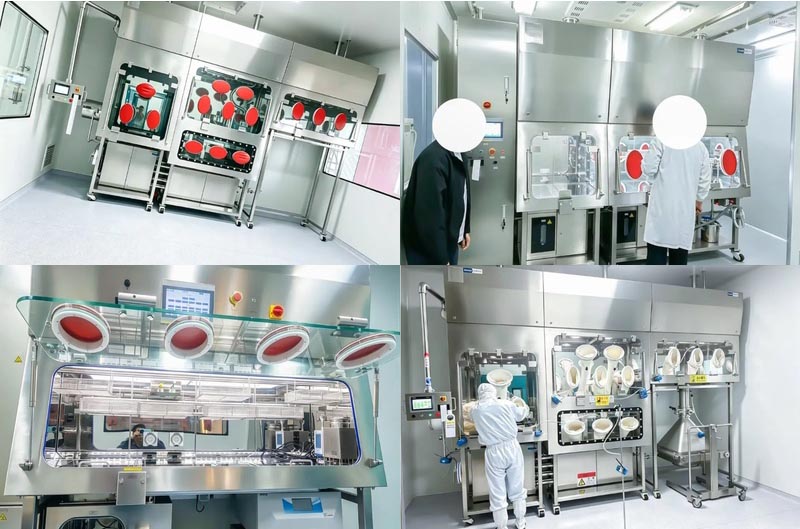
Negative-pressure isolators are widely used in operations involving hazardous materials, such as highly potent active pharmaceutical ingredients (HPAPIs), pathogenic microorganisms, and radioactive substances. Their primary objective is to prevent the leakage of harmful aerosols from the enclosure, thereby protecting both operators and the external environment. System validation is a critical activity for ensuring compliance with GMP standards, the YY/T 0567.6 standard, the *Chinese Pharmacopoeia* (General Chapter 9206), and the requirements stipulated in Order No. 818. The validation process for negative-pressure isolators spans the entire IQ/OQ/PQ lifecycle, with three core tests—pressure differential stability, enclosure leak rate, and glove/sleeve integrity—directly determining the system's containment capability. This article provides a professional analysis of these three key tests, covering validation logic, testing principles, implementation procedures, acceptance criteria, risk control, and ongoing monitoring.
I. Overall Framework for Negative-Pressure Isolator System Validation
Static, Dynamic, and Biological Decontamination
The purpose of validating a negative-pressure isolator is to demonstrate that the equipment can consistently maintain its containment barrier and establish a stable negative-pressure gradient under all predefined operating conditions—including static and dynamic states, during vaporized hydrogen peroxide (VHP) decontamination, and throughout material transfer processes—ensuring that no hazardous agents are released into the external environment. The validation process is divided into the following stages:
Q: Installation Qualification (IQ)
A: Verify the compliance of the equipment installation, including ductwork connections, differential pressure sensors, exhaust HEPA filters, glove ports, and alarm and data acquisition systems; ensure that all instruments have undergone metrological calibration.
Q: Operational Qualification (OQ)
A: Conduct differential pressure verification, chamber leak testing, and glove integrity testing; also verify the functionality of fan interlocks, VHP decontamination processes, pass-through chamber interlocks, and alarm systems.
Q: PQ (Performance Qualification)
A: Simulate actual production operations to replicate the aforementioned parameters under dynamic conditions. This verifies the impact of personnel activity, material entry/exit, and the opening/closing of chamber doors on containment and negative pressure, while confirming long-term operational stability.
Core risk rationale: The failure of a negative-pressure isolator to provide protection primarily stems from three types of issues—reversal of the pressure differential gradient, leaks in the enclosure (shell, flanges, or welds), and damage to gloves or sleeves. Consequently, these three tests are not interchangeable and must be verified independently.
II. Interpretation of Pressure Differential Validation for Negative-Pressure Isolators
Test Objectives, Principles, and Key Points
Q: Test Objective
A: To verify that a stable negative pressure gradient can be established between the isolator chamber and the buffer/transfer chamber. It must be ensured that no pressure reversal occurs during fan start-up/shutdown, door opening/closing, VHP (Vaporized Hydrogen Peroxide) cycles, or disturbances caused by personnel operations. Furthermore, the system’s pressure monitoring, audible/visual alarms, and data logging functions must be reliable, ensuring that airflow consistently moves from the clean external environment into the isolator chamber, thereby preventing the leakage of aerosols.
Q: Test Principle
A: High-precision differential pressure transmitters are used to measure the pressure difference between the isolator chamber and adjacent buffer rooms or cleanrooms. Data is collected continuously under both static (unloaded) and dynamic (simulated operational) conditions to verify the system's ability to maintain the set negative pressure range, its response time, the magnitude of pressure fluctuations, and the functionality of out-of-limit alarms. The design principle for the negative pressure gradient is that areas with a higher risk of contamination must maintain a greater absolute negative pressure, creating a stepped negative pressure profile that prevents the escape of contaminants.
Key Points for Test Execution
Negative Pressure Isolator
01: Instrument Preparation
Differential pressure sensors must be calibrated, with accuracy meeting specified requirements. The data system must support audit trails and continuous storage, in compliance with the data integrity requirements stipulated in Order No. 818.
02: Static Differential Pressure Testing
Start the system and, once pressure has stabilized, record data continuously to evaluate the ability to maintain a steady-state negative pressure. Test scenarios such as fan power failure or the failure of an individual fan (including interlock responses) to assess the risk of a drop in negative pressure; it is strictly prohibited for the chamber pressure to become positive.
03: Dynamic Differential Pressure Testing
Simulate actual operational conditions—including the opening and closing of transfer chamber doors, disturbances caused by glove-port operations, the entry and exit of materials, and the full VHP bio-decontamination process—while continuously monitoring changes in differential pressure.
04: Alarm Function Verification
Trigger an out-of-limit pressure condition to confirm that the system’s audible and visual alarms, event logging, and interlock actions (such as necessary exhaust protection) function correctly.
The negative pressure setpoint must be determined based on the risk level of the materials being handled. For isolators used with highly potent substances or microorganisms, the chamber is typically maintained at a negative pressure of -15 Pa to -30 Pa relative to the adjacent buffer room. The buffer room, in turn, is maintained at a secondary negative pressure relative to the external cleanroom, creating a pressure gradient. Pressure fluctuations must remain within the limits specified in the equipment documentation and validation protocol. It is strictly prohibited for the pressure differential to reverse (i.e., for the chamber to become positively pressurized) during operational transitions. The system should be capable of triggering alarms if pressure limits are exceeded, and all data must be complete and traceable.
III. Interpretation of Leak Testing for Negative Pressure Isolators
Test Objectives, Principles, and Key Points
Q: What is the objective of the test?
A: The objective is to quantitatively verify the airtightness of the entire isolator structure—including the main shell, welds, flanges, door seals, transfer port interfaces, and filter seals—by determining the system leak rate. This confirms that, under rated negative pressure conditions, hazardous aerosols cannot escape through gaps in the enclosure; it serves as a fundamental validation step for the containment barrier.
Q: What is the test principle?
A: The primary method used is the pressure decay test (also known as the pressure-hold test). All openings of the isolator are sealed, and the chamber is evacuated to the negative pressure specified in the validation protocol. After a stabilization period to account for temperature effects, the test begins; the rate of pressure rise (recovery) is monitored over a set duration and converted into a total system leak rate. Alternatively, a tracer gas method (e.g., using SF₆) may be employed to pinpoint the location of leaks at welds or sealing points, which is useful for troubleshooting deviations.
Key Points for Test Execution
Negative Pressure Isolator
01: Key Points for Test Execution
1. Seal all glove ports, transfer chambers, and sampling ports on the isolator. Close all valves connecting to the external environment, leaving only the pressure test port accessible.
2. Evacuate the chamber to the negative pressure specified in the validation protocol and allow it to stabilize. Since temperature significantly affects pressure decay, the internal temperature must be stable before the timing of the test begins.
3. Initiate the test and continuously record the pressure changes over time. Calculate the leak rate upon completion of the test.
4. If the leak rate exceeds the specified limit, use a tracer gas or a foam-based leak detection method to locate leaks at welds, door gaskets, flanges, HEPA filter clamping frames, etc. Once repairs are made, repeat the test.
02: Acceptance Criteria
Leak rate limits must be pre-defined in the validation protocol, based on equipment technical documentation, risk assessments, and regulatory requirements. If the leak rate exceeds these limits, the isolator is deemed unfit for use. A passing leak test confirms that the chamber’s primary containment barrier meets design specifications; however, as such tests cannot detect minute punctures in the gloves, glove integrity must be verified separately.
IV. Integrity Testing for Gloves and Sleeves in Negative-Pressure Isolators
Test Objectives, Principles, and Key Considerations
Q: What is the objective of the test?
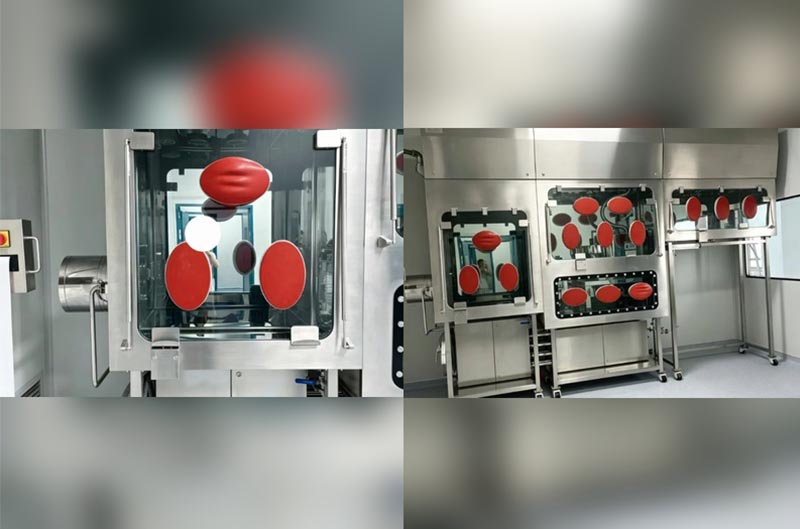
A: Gloves and sleeves are the components of an isolator most frequently subjected to mechanical stress and are the most susceptible to damage, representing the weakest points in the containment barrier. This test is designed to detect micro-pores or cracks in the gloves, seal failures at the interface between the sleeve and the chamber, or leaks at bonded joints. It prevents the release of hazardous substances from the chamber—which could occur if a glove were damaged during operator interventions.
Q: What is the test principle?
A: The industry-standard method for glove leak testing is the pressure decay method. A glove/sleeve assembly is mounted onto a specialized leak-testing chuck and inflated to a specified pressure. After a stabilization period, the pressure decay is monitored over a set duration to determine whether a leak exists. This approach allows for the independent testing of individual components, enabling the systematic inspection of each glove position.
Test Implementation: Negative-Pressure Isolators
01: Key Implementation Steps
1. Perform a visual inspection of the gloves before testing, checking for scratches, signs of aging, discoloration (whitening), pinholes, or creases and cracks in the sleeves. If any visual defects are identified, the glove must be replaced immediately without proceeding to the leak test.
2. Secure the glove onto the leak tester’s chuck and seal the cuff. Inflate the glove to the specified pressure and allow for a stabilization period to eliminate pressure drift caused by material deformation.
3. Proceed to the pressure-hold phase, during which the instrument automatically records any pressure decay. Throughout the test, the glove may be gently flexed or bent to simulate operational stress, which helps reveal minute cracks. 4. Microbial Challenge Method (Optional/Supplementary): The glove is immersed in a peptone water solution, followed by membrane filtration and incubation of the immersion liquid. This method is used to detect minute leaks that cannot be identified through physical leak testing; it is primarily employed during the Performance Qualification (PQ) phase for high-risk operations.
5. Testing Frequency: Mandatory testing following the installation of new gloves; routine testing prior to each production batch or decontamination cycle; re-testing after any glove replacement due to punctures, impacts, or other damage; and periodic re-validation.
02: Acceptance Criteria
The system is considered compliant if the pressure decay value meets equipment standards and established validation acceptance limits, and if no sudden pressure drops occur. If any glove fails the leak test, the isolator must not be used for handling hazardous materials; the glove must be replaced and successfully pass a re-test before operations can resume.
V. Validation Results, Deviation Management, and Continuous Monitoring Requirements
Audit Trail and Continuous Monitoring
1. Validation protocols, raw data, calibration certificates, and reports must be archived in their entirety. All data must comply with data integrity requirements and include an audit trail.
2. In the event of a failure in any test item, the isolator must be locked out from use. A deviation investigation must be conducted, and corrective and preventive actions (CAPA) must be implemented. Following repairs, the specific test must be repeated, and a full-scale re-validation may be required if deemed necessary.
3. Ongoing Routine Monitoring: Continuous, real-time monitoring and recording of pressure differentials during operation; spot checks of glove integrity prior to each decontamination cycle; periodic re-validation of chamber leak rates; and concurrent PAO integrity testing of the exhaust-side HEPA filters.
4. Change Control: Modifications or replacements involving the chamber, door seals, gloves, exhaust systems, or pressure differential sensors are classified as major changes. Such changes trigger a formal assessment, with re-validation conducted as required.
The protective capability of a negative-pressure isolator does not rely on a single metric. Pressure differential ensures the correct direction of airflow; chamber leak testing confirms the airtightness of the enclosure; and glove integrity validation verifies the barrier at the human-machine interface. Together, these three elements form the core lines of defense for a contained, protective system. For applications involving highly potent active pharmaceutical ingredients (HPAPIs), biologics, and radiopharmaceuticals, validation activities must establish acceptance criteria based on risk assessments. These activities should strictly adhere to GMP standards, the YY/T 0567.6 standard, and pharmacopeial guidelines, incorporating full-lifecycle validation and continuous monitoring. At the equipment level, measures must be implemented to ensure operator safety and prevent cross-contamination, thereby meeting the compliance requirements for unannounced regulatory inspections.
