COMPANY NEWS
Technical Analysis of Explosion-Proof VHP Pass-Through Chambers
In high-risk environments—such as those involving fine chemicals, highly potent active pharmaceutical ingredients (HPAPIs), flammable or explosive excipients, or combustible dust—the transfer of materials between areas of varying cleanroom classifications presents two intertwined sets of risks: first, the potential loss of sterility or cleanliness due to microbial or particulate contamination; and second, the risk of fire or explosion—whether caused by the accumulation of vaporized hydrogen peroxide (V₂O₂) in a sealed chamber igniting due to static electricity or high temperatures, or by sparks from electrical components.
Traditional pass-through boxes offer only physical separation and basic air-purging functions. While standard VHP-enabled pass-through boxes can perform sterilization using vaporized hydrogen peroxide, their electrical components, fans, sensors, and control circuits are typically standard-grade and lack explosion-proof capabilities. Conversely, conventional explosion-proof pass-through boxes often lack effective sterilization processes and sterile isolation design. In production environments where combustible gases, vapors, or explosive dust mixtures may be present, a single-layer protection system cannot simultaneously meet both cleanroom compliance and "inherent safety" requirements. Explosion-proof VHP pass-through boxes are specialized equipment developed specifically for these complex, multi-risk operating conditions.
I. Equipment Definition and Operating Principle
Explosion-Proof Safety
An explosion-proof VHP pass-through box is a material transfer unit that integrates vaporized hydrogen peroxide (VHP) sterilization, physical separation between cleanroom zones, and explosion-proof safety protection. Installed in the wall between rooms of different cleanroom classifications—or between explosion-hazard zones and non-hazardous zones—it serves as a dedicated channel for the movement of materials. It enables surface sterilization and inter-zonal transfer without compromising the cleanroom environment or requiring the opening of primary isolation doors.
Workflow
01: Loading and Sealing
Items are placed inside the chamber. The inner and outer doors are interlocked and closed, creating an isolated, sealed environment.
02: Vaporized Sterilization
A hydrogen peroxide solution is processed through a vaporization unit to generate a controlled hydrogen peroxide vapor. This vapor fills the chamber uniformly, coming into contact with the surfaces of the items. Microorganisms are inactivated under precisely controlled conditions—including concentration, temperature, humidity, and exposure duration.
03: Ventilation and Purging
Following sterilization, the chamber is purged with HEPA-filtered air to remove residual hydrogen peroxide vapor. This ensures that the concentration of hydrogen peroxide within the chamber drops below safe limits, preventing any residual gas from entering the cleanroom or posing an exposure risk to operators.
04: Unloading and Transfer
Once the sterilization process is successfully completed, the door on the opposite side can be opened, allowing the items to be transferred into the target cleanroom area.
II. Core Components of the Explosion-Proof System
Explosion-Proof Electrical Systems and Chamber Structure
Explosion protection is not merely a matter of selecting individual components; it is a comprehensive system design that encompasses the electrical, structural, and process safety of the entire unit. Key elements include:
Q: Explosion-Proof Electrical Systems and Intrinsically Safe Circuits
A: Fans, motors, heaters, sensors, lighting, actuators, and terminal blocks located within the chamber or hazardous zones are selected based on the specific classification of the hazardous area (e.g., Zone 1, Zone 2, or dust-hazardous zones 21 and 22). Appropriate explosion-proof protection methods are applied, such as flameproof (Ex d), increased safety (Ex e), intrinsically safe (Ex i), or encapsulated (Ex m). Control cabinets are positioned in a safe zone, and signals from the hazardous side are transmitted via isolation barriers and intrinsically safe circuits. This eliminates the potential for ignition caused by electrical sparks or high-temperature surfaces at the source.
Q: Chamber Structure and Anti-Static Design
A: The chamber features an all-welded stainless steel construction with rounded internal corners, eliminating "dead zones" that are difficult to clean and ensuring both the uniform distribution of sterilizing agents and the effective removal of any residues. The internal surfaces are treated to be anti-static, and material trays and racks are reliably grounded to the chamber to maintain an equipotential state, thereby preventing the accumulation of static electricity. Seals are made from materials resistant to hydrogen peroxide-induced aging and solvent corrosion, ensuring they remain functional over long-term use.
Q: Ventilation, Purging, and Concentration Monitoring
A: The aeration phase is equipped with a dedicated exhaust and high-efficiency filtration circuit that monitors hydrogen peroxide concentration and the presence of combustible gases within the chamber in real time. If concentrations become abnormal or purging requirements are not met, the system locks the unloading process and triggers an alarm, preventing high-concentration vapors or combustible mixtures from entering the production area.
Q: Safety Interlocks and Protection Logic
A: The equipment incorporates various safety interlocks, including door interlocks, pressure protection, over-temperature protection, liquid level monitoring (including low-level detection), and audible/visual fault alarms. Should any anomaly occur, the system pauses the sterilization cycle and enters a safe state, while simultaneously logging alarm codes and process parameters to facilitate traceability and troubleshooting.
III. Design Highlights and Application Scenarios
Sterilization Capability
Beyond explosion-proof requirements, the reliability of the sterilization process and the ability to maintain a clean environment are critical for compliant operation:
Q: Sterilization Capability
A: Vaporized hydrogen peroxide diffuses in a gaseous state to reach material surfaces and crevices within the chamber, effectively inactivating microorganisms such as vegetative bacteria and spores. The sterilization process must be tailored to the specific material load, packaging type, and surface materials. Validation is conducted using biological indicators (BI) and chemical indicators (CI) to establish key parameters, including exposure concentration, duration, temperature, and humidity.
Q: High-Efficiency Filtration and Airflow Management
A: Both the air intake and exhaust systems are equipped with high-efficiency particulate air (HEPA) filters. These maintain an appropriate pressure differential between the chamber and the adjacent rooms, preventing the backflow of air from less clean areas. The airflow design ensures the uniform distribution of the vapor throughout the chamber, eliminating any "blind spots" where sterilization might be incomplete.
Q: Material Compatibility
A: The compatibility of material surfaces, packaging, and chamber structures with long-term hydrogen peroxide exposure must be evaluated to prevent corrosion, discoloration, or material degradation.
Q: Residue Control
A: The aeration process must ensure that hydrogen peroxide residues are reduced to acceptable levels, accounting for both occupational exposure limits for personnel and product compatibility requirements.
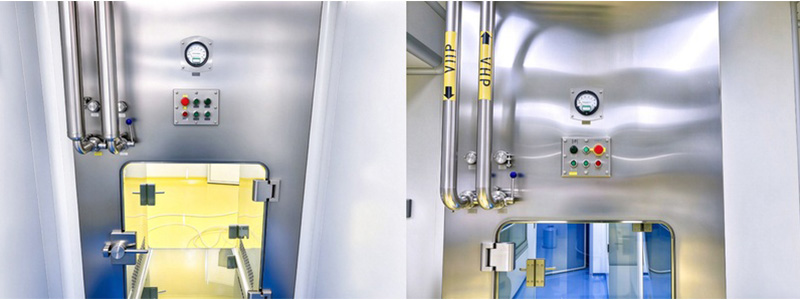
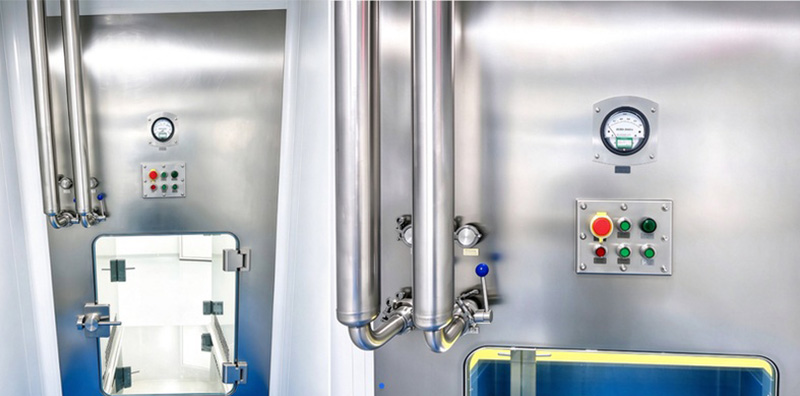
Explosion-proof VHP (Vaporized Hydrogen Peroxide) pass-through boxes are primarily designed for production and laboratory environments that carry a risk of fire or explosion while requiring strict sterility and cleanliness. Typical applications include:
Production facilities for highly potent or highly sensitizing active pharmaceutical ingredients (APIs) and intermediates;
Formulation and chemical processes involving flammable solvents such as ethanol or acetone;
Material transfer in environments containing explosive dust or combustible gases;
The transfer of samples and consumables in microbiological laboratories or biosafety facilities that require explosion-proof equipment;
Production layouts that necessitate a controlled passage between explosion-proof zones and standard cleanrooms.
The value of an explosion-proof VHP pass-through box lies in its integration of two distinct safety systems—aseptic isolation and explosion protection—into a single transfer point. It not only prevents cross-contamination by microorganisms and particulates but also mitigates fire and explosion risks through electrical, structural, and process-based interlocks. This provides a stable and traceable material transfer solution for high-risk cleanroom environments. For production and laboratory settings that involve flammable or explosive substances alongside stringent cleanliness requirements, the proper selection, standardized validation, and ongoing maintenance of this barrier are essential for ensuring personnel safety, product quality, and regulatory compliance.
