COMPANY NEWS
An Analysis of Complete Cleanroom and Sterilization Equipment for Pharmaceutical Workshops: From Pass Boxes and Isolators to Laminar Flow Systems
The core of sterile pharmaceutical manufacturing lies in the comprehensive prevention of contamination from microorganisms, dust, and particulates. The clean environment within a pharmaceutical workshop is not achieved merely through an enclosed space, but rather through a specialized system of clean equipment featuring multi-layered safeguards and precise, coordinated operations. From basic protection during material transfer and absolute isolation for high-precision tasks to the central regulation of comprehensive air purification, three key pieces of equipment—pass boxes, sterile isolators, and laminar flow systems—perform their respective roles in synergy. By strictly adhering to GMP regulations and ISO cleanroom standards, they establish a robust safety defense for sterile pharmaceutical production.
I. Pass Box: The First Sterile Checkpoint for Material Transfer in Clean Areas
Working Principles and Classification of Pass Boxes
In sterile pharmaceutical production facilities, the movement of personnel and the opening of equipment doors are primary causes of contamination. As essential auxiliary equipment for cleanrooms, pass-through boxes serve a critical function: they replace the direct opening of doors for material transfer, thereby preventing airflow between clean and non-clean areas—or between areas of different cleanliness grades—and minimizing contamination risks in the clean environment. In essence, they act as a "sterile bridge" for material transfer.
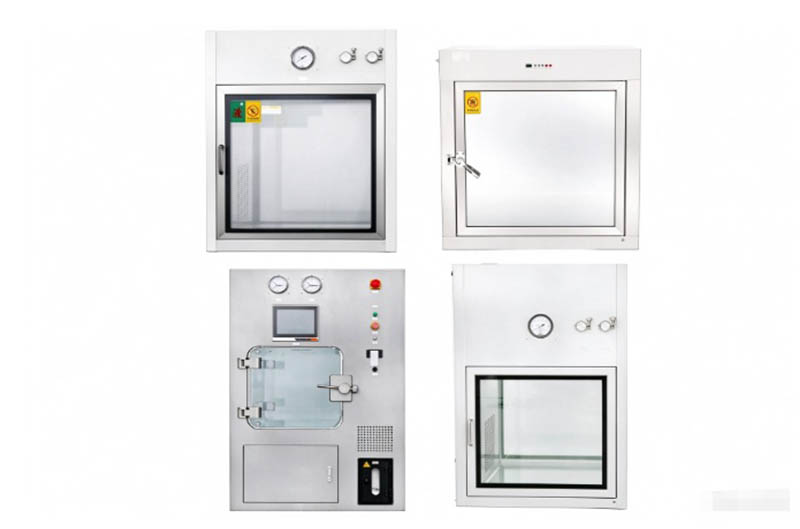
Working Principles and Classification of Pass Boxes
Laminar Flow Pass Boxes and VHP Pass Boxes
01: Core Operating Principle
The pass box is equipped with a bidirectional electronic interlocking system that prevents the doors on both sides from opening simultaneously, thereby physically blocking airflow between areas of differing cleanliness levels. It purifies transferred materials through self-cleaning dust removal, sterilization, and pressure differential balancing—eliminating surface dust and microorganisms to ensure sterile transfer. This system is suitable for transferring various small items, such as active pharmaceutical ingredients (APIs), packaging materials, laboratory apparatus, and small equipment components.
02: Main Classifications and Characteristics Specific to Pharmaceutical Applications
Based on purification capabilities and application scenarios, pass boxes commonly used in pharmaceutical workshops fall into three categories, catering to production requirements across different cleanliness grades:
Standard Static Pass Box: A basic purification unit lacking active air showers or self-purification systems; it relies solely on an interlocking mechanism to maintain air isolation. Suitable for material transfer between clean zones of the same grade, it features a simple structure, ease of cleaning, and high cost-effectiveness, making it widely used in standard Grade D and Grade C auxiliary areas.
Self-cleaning dynamic pass box: Equipped with a fan and an H14-grade HEPA filter, it generates a recirculating clean airflow within the chamber to automatically purge particles from material surfaces and maintain positive pressure, effectively preventing the ingress of external contaminants. It is suitable for material transfer between clean zones of different grades (such as Grade C and Grade B) and is the preferred choice for most sterile pharmaceutical production facilities.
VHP pass box: A specialized model for high-end pharmaceutical applications, integrating a Vaporized Hydrogen Peroxide (VHP) sterilization system with vertical laminar airflow purification technology. It achieves ISO Class 5 (Class 100) cleanliness standards within the chamber and offers combined dust removal, sterilization, and self-cleaning capabilities, leaving no disinfectant residues. Primarily used in high-cleanliness environments—such as Grade A sterile zones and sterile filling workshops—it enables the fully sterile transfer of sterile consumables and precision components.
03: Key Advantages for Pharmaceutical Applications
Pharmaceutical-grade pass boxes typically feature 304 stainless steel construction and an interior design with coved corners—eliminating dead zones where dust might accumulate and facilitating easy cleaning and disinfection. This design fully meets the rigorous, high-frequency sanitization requirements of pharmaceutical production facilities. Incorporating multiple safety features—such as interlocking mechanisms, dynamic self-purification, and sterilization capabilities—these units significantly reduce the risk of cross-contamination during material transfer, making them indispensable protective equipment for sterile production environments.
II. Isolators: An absolute protective barrier for high-precision aseptic operations
Principles and classification of isolators
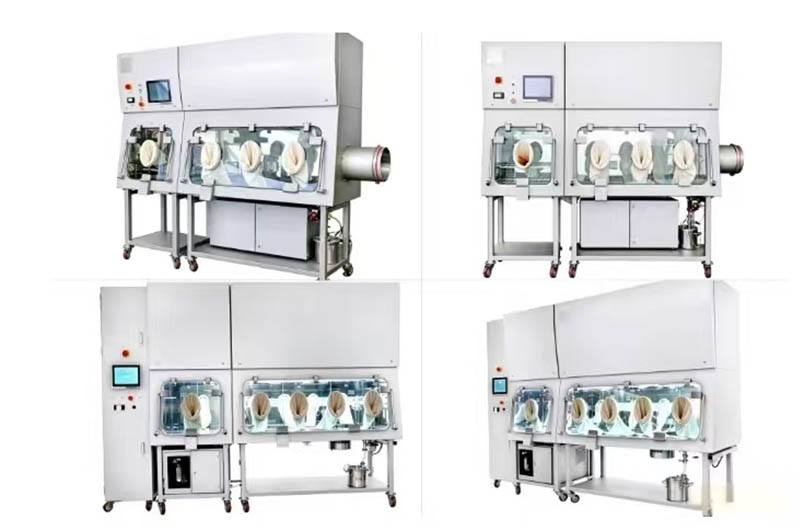
Compared to the material transfer protection provided by pass-through hatches, aseptic isolators represent the ultimate protective equipment for core aseptic processing areas. In high-precision processes such as aseptic filling, pharmaceutical dispensing, sterility testing, and microbial strain handling, the risk of trace contamination persists in open environments—even when the facility meets Grade B or C cleanroom standards. Aseptic isolators enable the creation of an independent, stable, and sealed ISO 5 (Grade A) aseptic environment within a standard cleanroom, ensuring complete isolation among personnel, equipment, materials, and the surrounding environment; they are thus essential equipment for high-end aseptic pharmaceutical manufacturing.
Q: What is the core operating principle?
A: The aseptic isolator operates through the synergy of four key modules: physical rigid isolation, dynamic airflow control, intelligent sterilization, and monitoring. A fully sealed chamber creates an isolated environment, while glove ports enable hands-free, no-contact operations. Built-in ULPA filters continuously supply unidirectional clean airflow to maintain positive pressure and prevent the ingress of external contaminants. An integrated VHP (Vaporized Hydrogen Peroxide) sterilization system ensures rapid, residue-free, and highly efficient whole-chamber decontamination. Finally, an intelligent monitoring module tracks critical parameters—such as differential pressure, cleanliness, temperature, and humidity—in real-time to ensure the operating environment consistently meets required standards.
Q: What are the mainstream types of pharmaceutical isolators and their application scenarios?
A: Aseptic filling isolators: Designed specifically for the production of sterile preparations, these units accommodate automated or manual dispensing, filling, and sealing processes for injectable solutions, lyophilized powders, and sterile powders. They feature modular customization and compatibility with automated production lines, significantly enhancing the level of sterility assurance.
Sterility testing isolators: Primarily used for quality control procedures such as sterility testing, microbial limit testing, and microbial culture, these isolators completely eliminate the risk of laboratory environmental contamination affecting test samples. They ensure the accuracy and reliability of test data and comply with pharmacopoeial standards for sterility testing.
Negative-pressure isolator: Designed with negative-pressure airflow to prevent the leakage of hazardous internal aerosols, it is suitable for handling special materials such as highly potent drugs, toxic active pharmaceutical ingredients (APIs), and microbial strains, ensuring both sterility protection and biosafety.
Traditional aseptic manufacturing relies on upgrading the entire facility to a high cleanliness grade, entailing high costs and complex operations and maintenance. In contrast, aseptic isolators enable the production of high-grade aseptic pharmaceuticals within lower-grade cleanrooms; this eliminates the need for facility-wide cleanliness upgrades, thereby significantly reducing both construction and operational costs. Furthermore, their fully isolated operating mode fundamentally prevents contamination from personnel and the environment, making them essential equipment for meeting stringent compliance standards—such as the latest GMP and FDA regulations—in the aseptic pharmaceutical sector. Some high-end isolators also feature Rapid Transfer Ports (RTPs) that facilitate the aseptic transfer of materials, seamlessly linking upstream and downstream processes to establish a closed-loop aseptic production workflow.
III. Laminar Flow System: The Core Air Purification Hub for Total-Area Cleanliness in Sterile Workshops
Working Principles and Mainstream Equipment
If pass-through boxes represent "point-specific protection" and isolators provide "localized core protection," then the laminar flow system serves as the central hub for maintaining cleanliness across the entire aseptic pharmaceutical workshop, acting as the fundamental safeguard for the proper operation of all cleanroom equipment. The workshop's cleanliness hinges primarily on air purification capabilities; through precise airflow design, the laminar flow system continuously filters, replaces, and purifies the air, consistently maintaining the required cleanliness levels, pressure differentials, and temperature and humidity standards across all zones.
Core working principle:
Unlike conventional turbulent ventilation, laminar flow systems utilize unidirectional, constant-velocity laminar airflow technology. Air undergoes three-stage filtration—primary, medium, and high-efficiency—before being continuously delivered to the clean zone at a uniform velocity and in parallel streamlines. This ensures the orderly and steady removal of contaminants such as dust, microorganisms, and particulates from the workspace, eliminating airflow dead zones and preventing dust-stirring eddies. Through dynamic air circulation and purification, the system maintains stable cleanroom environments ranging from ISO Class 5 to ISO Class 8, while precisely regulating workshop pressure differentials, temperature, and humidity to ensure a stable, sterile production environment.
Key equipment components in pharmaceutical workshops:
Clean Laminar Flow Hood: A localized laminar flow purification unit used to flexibly establish Grade A aseptic zones. It is commonly deployed at critical points—such as filling lines, material handling stations, and sampling areas—to meet requirements for high-precision localized cleanliness.
Laminar Flow Ceiling: A core purification unit for the entire workshop area. Covering the ceiling of the clean zone, it delivers uniform vertical laminar airflow. It is standard equipment for high-cleanliness workshops (Grades A and B), ensuring stable airflow across the entire space.
Fresh Air Purification and HVAC System: Serving as the system's power core, it manages fresh air supply, temperature and humidity regulation, and pressure differential balancing. Equipped with a three-stage filtration unit, it ensures the air entering the workshop meets cleanliness standards right from the source.
Return Air Dust Removal System: Facilitates the purification of recirculated workshop air by continuously filtering out indoor contaminants; this maintains a stable clean environment while simultaneously reducing energy consumption.
Contamination in aseptic pharmaceutical manufacturing primarily stems from airborne microorganisms and particulates; laminar flow systems address the issue of persistent contamination—which static disinfection methods cannot eliminate—through continuous, dynamic purification. Furthermore, precise differential pressure control ensures that air pressure in high-cleanliness zones remains higher than in lower-cleanliness zones, thereby preventing the backflow of external contaminants. By maintaining stable airflow, temperature, and humidity, these systems prevent dust accumulation and microbial proliferation, providing the foundational environment for terminal cleanroom equipment such as pass-through boxes and isolators; they serve as the "power source" for the entire cleanroom system.
IV. Synergy of Three Major Systems
Establishing an End-to-End Sterile Protection System
The clean system of an aseptic pharmaceutical workshop is an integrated, closed-loop assembly comprising three types of equipment that function in a progressive, interconnected manner; each is indispensable:
The laminar flow system serves as the foundation, establishing a clean infrastructure across the entire workshop, stabilizing cleanliness levels in various zones, and providing a compliant environment for material transfer and aseptic operations. Pass-through chambers act as transfer hubs, guarding the primary entry and exit points to prevent cross-contamination between zones and ensure the aseptic transfer of materials. Aseptic isolators serve as the core stronghold, focusing on high-risk processes—such as filling, inspection, and dispensing—to create an ultra-pure aseptic operating space and guarantee absolute sterility during critical production stages.
From comprehensive air purification and aseptic material transfer to the absolute isolation of core processes, three distinct sets of equipment perform their respective roles and provide layered defenses; together, they completely eliminate pathways for microbial and particulate contamination, fully meeting the compliance requirements and quality standards for aseptic pharmaceutical production.
The core competitiveness of aseptic pharmaceutical manufacturing lies in the ability to maintain rigorous environmental control. Pass-through chambers address contamination risks during material transfer, isolators ensure precise sterility for core operations, and laminar flow systems provide continuous purification of the entire environment. Covering every aspect—from specific points and flow paths to the entire facility—these three elements form a standardized and regulated clean equipment system for the pharmaceutical workshop.
As GMP compliance standards in the pharmaceutical industry continue to evolve, cleanroom equipment is advancing toward greater intelligence, modularity, energy efficiency, and adaptability. Through precise monitoring, automated sterilization, and intelligent control, these systems further enhance the stability and safety of aseptic production, establishing a robust core safeguard for the quality and safety of sterile pharmaceuticals.
