COMPANY NEWS
Precision Sterilization & Full Traceability | VHP Pass Box Solutions for High-Level Laboratories
In cutting-edge sectors such as biosafety laboratories, biopharmaceuticals, sterility testing, cell therapy, and IVD reagent R&D, the transfer of materials across clean zones represents the most critical—and vulnerable—link in a facility's overall biosafety barrier.
Given the industry's stringent compliance, high safety, and zero-tolerance-for-error standards, a reliable, stable, auditable, and traceable material sterilization and transfer system has become an essential requirement for high-level laboratories.
Leveraging over a decade of expertise in clean sterilization technology, AN specializes in the fields of biosafety containment and aseptic control. Tailored for demanding environments—such as high-end scientific research, biopharmaceuticals, and epidemic prevention testing—the company has upgraded its TKSAGE HPB series of high-grade VHP (Vaporized Hydrogen Peroxide) pass box solutions. Distinguished by four core advantages—precise sterilization, zero residual contamination, full-process data traceability, and high-integrity airtight safety—these solutions effectively resolve the critical challenges of material transfer in high-grade cleanrooms, establishing robust aseptic barriers for a wide range of high-end biosafety applications.
I. Industry Pain Points
Do standard transfer devices fall short of the requirements for high-grade application scenarios?
The root cause of many projects failing acceptance inspections, harboring operational hazards, or showing defects during unannounced audits is essentially a lack of sterilization and compliance capabilities in the material transfer process. We have identified four core pain points common across the industry:
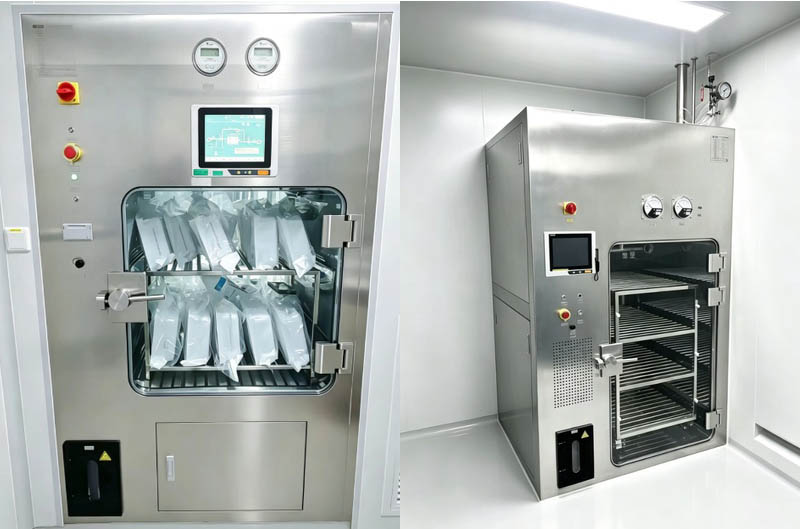
Q: Incomplete sterilization with significant "blind spots."
A: Ultraviolet sterilization is effective only on surfaces directly exposed to the light; it fails to reach material crevices, packaging interlayers, chamber corners, or shadowed areas. It is highly ineffective against resilient bacterial spores and fungal spores, making it unable to meet the sterility requirements of high-grade environments.
Q: High-temperature sterilization damages sensitive materials.
A: High-temperature, high-pressure sterilization methods can damage biological samples, reagent kits, paper-based consumables, precision laboratory equipment, and flexible packaging materials; consequently, their scope of application is extremely limited, and they cannot meet the need for the frequent, routine transfer of materials.
Q: Lack of complete data records and non-compliance
A: Conventional equipment lacks standardized sterilization data retention—including no access control, no process curve recording, and no audit trails. Consequently, it fails to meet compliance standards such as GMP, ISO, and 21 CFR Part 11. The absence of a basis for audits and evidence for traceability represents a significant compliance vulnerability for pharmaceutical companies and high-end laboratories.
Q: Lack of complete data records and non-compliance
A: Conventional equipment fails to retain standardized sterilization data—lacking access controls, process curve recording, and audit trails. Consequently, it cannot meet compliance standards such as GMP, ISO, and 21 CFR Part 11. The absence of a basis for audits and evidence for traceability represents a significant compliance vulnerability for pharmaceutical companies and high-end laboratories.
II. Core Technology of VHP Pass Box Chambers
Low-temperature, broad-spectrum VHP sterilization; precise disinfection with no dead zones.
AN’s HPB series VHP pass-box chambers feature proprietary dynamic-balance vaporized hydrogen peroxide (VHP) sterilization technology. Unlike traditional static sterilization methods, this technology enables standardized sterilization across the entire chamber, all materials, and all dimensions.
Q: How does it achieve 360° sterilization without dead zones?
A: The equipment utilizes precise atomization and vaporization processes to convert liquid hydrogen peroxide into gaseous molecules. Characterized by high mobility and exceptional penetrative power, the gas thoroughly permeates packaging gaps, internal cavities and blind holes, corners, and the spaces between stacked items. This effectively eliminates the "blind spot" issues associated with UV sterilization, ensuring comprehensive, 360° disinfection of the entire internal chamber.
Q: High-level sterilization efficacy achieving a 6-log kill rate.
A: Verified by an authoritative third-party testing organization, the equipment achieves a 6-log sterilization reduction rate against the most challenging biological indicators specified in Chinese national standards, including Geobacillus stearothermophilus and Bacillus subtilis var. niger. It can completely inactivate various microorganisms, including bacteria, fungi, molds, viruses, and highly resistant spores, fully meeting the stringent sterile control requirements of high-level laboratories.
Q: Low-temperature sterilization preserves material integrity and is compatible with a wide range of consumables.
A: The entire sterilization process takes place at ambient or low temperatures—free from high heat, high pressure, or radiation damage. It is perfectly suited for sensitive materials such as biological samples, cell reagents, IVD kits, precision instruments, paper-based consumables, plastics, glass, and flexible packaging. Users need not worry about material damage, reagent degradation, or sample loss, thereby significantly reducing costs associated with laboratory consumable waste.
Q: Intelligent anti-condensation technology eliminates the risk of secondary contamination.
A: Equipped with high-precision dual sensors (monitoring temperature/humidity and concentration) and a proprietary intelligent saturation algorithm, the system dynamically regulates VHP concentration and the temperature-humidity balance within the chamber in real time. This precisely prevents hydrogen peroxide condensation, liquefaction, and wall-surface dripping, thereby avoiding material corrosion, chamber staining, and secondary contamination caused by liquid residues, ensuring a stable, safe, and standardized sterilization process.
Q: Automatic catalytic decomposition ensures zero residue and enhanced safety.
A: Upon completion of the sterilization cycle, the equipment automatically activates a catalytic decomposition system to rapidly break down residual hydrogen peroxide within the chamber into water and oxygen. This process leaves no chemical residues or harmful volatile compounds. Residual concentrations are monitored in real-time and data is logged, fully safeguarding the safety of laboratory personnel and maintaining air quality in the clean environment.
III. Robust Compliance
End-to-end data traceability; easily handle audits and unannounced inspections.
For biopharmaceutical companies, third-party testing laboratories, and national-level research platforms, mere functionality is just the baseline; compliant usability is the core requirement. Data integrity and process traceability are paramount in regulatory inspections.
AN’s VHP pass-box chamber features an intelligent control system that establishes a fully digitized sterilization management framework, effectively eliminating the drawbacks of traditional equipment—namely the lack of records, traceability, and oversight.
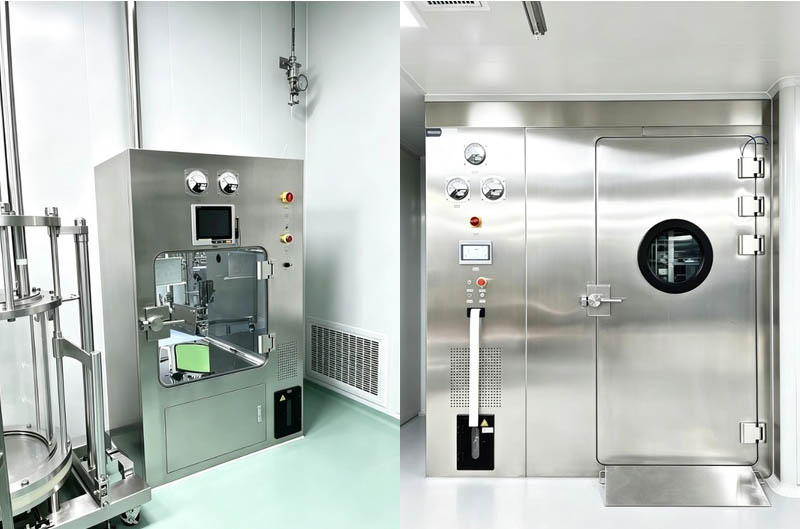
Comprehensive Automated Data Logging
The system automatically records core data for every sterilization cycle—including batch numbers, operator authorization details, start and end times, chamber temperature and humidity profiles, real-time VHP concentration, sterilization hold times, aeration durations, final residual concentrations, and equipment operating status. All data is automatically stored and tamper-proof.
Audit Trail Functionality for Advanced Compliance
Equipped with a comprehensive audit trail module, the system logs device operations, parameter modifications, and user activity. It fully complies with rigorous domestic and international standards—such as GMP, ISO 14644, and 21 CFR Part 11—making it ideal for scenarios ranging from unannounced pharmaceutical inspections and laboratory accreditation reviews to research project acceptance checks.
One-Click Report Export for Efficient Traceability
Generate and export standardized PDF sterilization reports with a single click. Featuring clear data and a professional format, these reports are ready for immediate use in documentation archiving, project acceptance, and routine internal audits, thereby significantly reducing compliance management costs and mitigating compliance risks.
IV. Precision Engineering
High-airtightness safety design, fortifying the biosafety barrier.
High-level biosafety environments impose extremely rigorous requirements regarding material quality, sealing performance, structural engineering, and protective capabilities. AN is committed to precision manufacturing, implementing comprehensive upgrades—from material selection to the finest details of craftsmanship—to meet the needs of diverse high-end cleanroom applications.
Premium stainless steel construction; sterile design with no inaccessible areas
The equipment chamber is constructed from 316L medical-grade stainless steel, featuring fully welded, rounded internal corners and a mirror-polished finish (Ra ≤ 0.6 μm). The surface is smooth and refined—free of weld seams, crevices, or dust-trapping grooves—making it exceptionally easy to clean and disinfect while preventing microbial growth. The external frame utilizes heavy-gauge 304 stainless steel, offering corrosion resistance, durability, and structural integrity suitable for long-term, high-frequency operation.
Dual Interlock & Airtight Seal: Eliminating Cross-Contamination
Equipped as standard with a dual mechanical and pneumatic interlock system, the unit ensures that doors on both sides cannot be opened simultaneously, physically preventing any direct connection between high- and low-cleanliness zones. For high-level biosafety laboratories (such as P3/P4), an inflatable sealing structure is available as an upgrade; this significantly enhances chamber airtightness, effectively preventing aerosol leakage and cross-zone airflow, thereby safeguarding critical biosafety standards.
Independent Dehumidification System for Reduced O&M Costs
Features a built-in, independent, and non-consumable dehumidification module—eliminating the need for frequent replacement of consumables like carbon molecular sieves. This ensures stable operation and a low failure rate, maintaining the required temperature and humidity for sterilization while significantly cutting long-term maintenance costs and minimizing downtime risks.
H14 High-Efficiency Filtration for Dual Safety Protection
Equipped with H14-grade high-efficiency filters at both air inlets and outlets, this dual-filtration system effectively blocks the leakage of microorganisms, dust, and aerosols. It prevents the spread of contaminants during sterilization, providing comprehensive safety protection for both the laboratory environment and personnel.
V. Scenario-based Customization & Full-Chain Services
Meeting high-end demands across all industries
Cleanroom environments across different industries and classification levels have distinct requirements regarding pass box dimensions, structure, sterilization parameters, installation methods, and compliance documentation. Rather than offering standardized, off-the-shelf equipment, AN provides clients with tailored, application-specific solutions.
Comprehensive coverage of application scenarios:
✅ Biosafety Level 2, 3, and 4 (BSL-2/3/4) laboratories
✅ Pharmaceutical GMP Grade A, B, C, and D cleanrooms
✅ R&D laboratories for cell therapy, genetic engineering, and stem cells
✅ Laboratories for IVD (in vitro diagnostic) reagents and microbiological testing
✅ Centers for Disease Control (CDC), epidemic prevention and testing, and public health research platforms
✅ High-end cleanrooms for food, cosmetics, and precision electronics manufacturing
We offer fully customized equipment—including wall-embedded, externally mounted, corner-mounted, large-capacity, and fully automated smart models—tailored to specific site layouts, wall thicknesses, material dimensions, traffic requirements, and biosafety levels. This ensures a perfect fit for operational conditions while avoiding issues such as dimensional mismatches, functional redundancy, or performance deficiencies.
We provide a comprehensive, closed-loop service—spanning initial site assessment, personalized design, industrial manufacturing, and on-site installation and commissioning, Through to FAT and SAT, full IQ/OQ/PQ validation documentation, operator training, and lifelong after-sales support—ensuring smooth project acceptance, regulatory compliance, and stable, long-term operation.
