PRODUCT
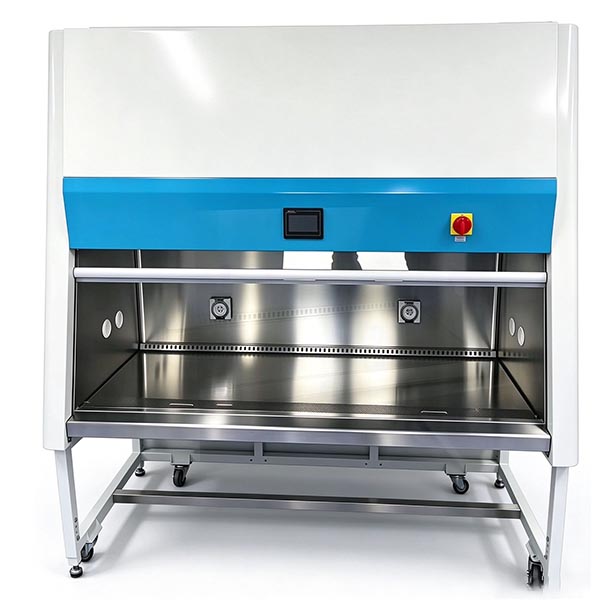
Class II Biosafety Cabinet for Laboratory Applications
Our Class II biosafety cabinet is designed for laboratory applications requiring controlled airflow and high-efficiency filtration. Featuring a stainless steel work area, an intuitive control panel and a top exhaust connection, this biosafety cabinet class 2 supports personnel protection, product protection and environmental protection. Custom configurations are available according to laboratory requirements, technical specifications and project needs.
LABORATORY BIOSAFETY EQUIPMENT
Class II Biological Safety Cabinet
Engineered for Controlled Laboratory Environments
Designed to support personnel protection, product protection and contamination control through controlled airflow and high-efficiency filtration.
Product configuration and performance are confirmed according to the selected model and project requirements.
Three Key Protection Functions
A Class II biological safety cabinet combines controlled airflow and filtration to support appropriate laboratory procedures.
Personnel Protection
Inward airflow at the front opening helps limit the release of potentially hazardous airborne contaminants.
Product Protection
HEPA-filtered downflow helps provide a controlled working environment for suitable laboratory procedures.
Environmental Protection
Controlled airflow and filtered exhaust help support containment according to the cabinet design.
Designed Around Controlled Airflow
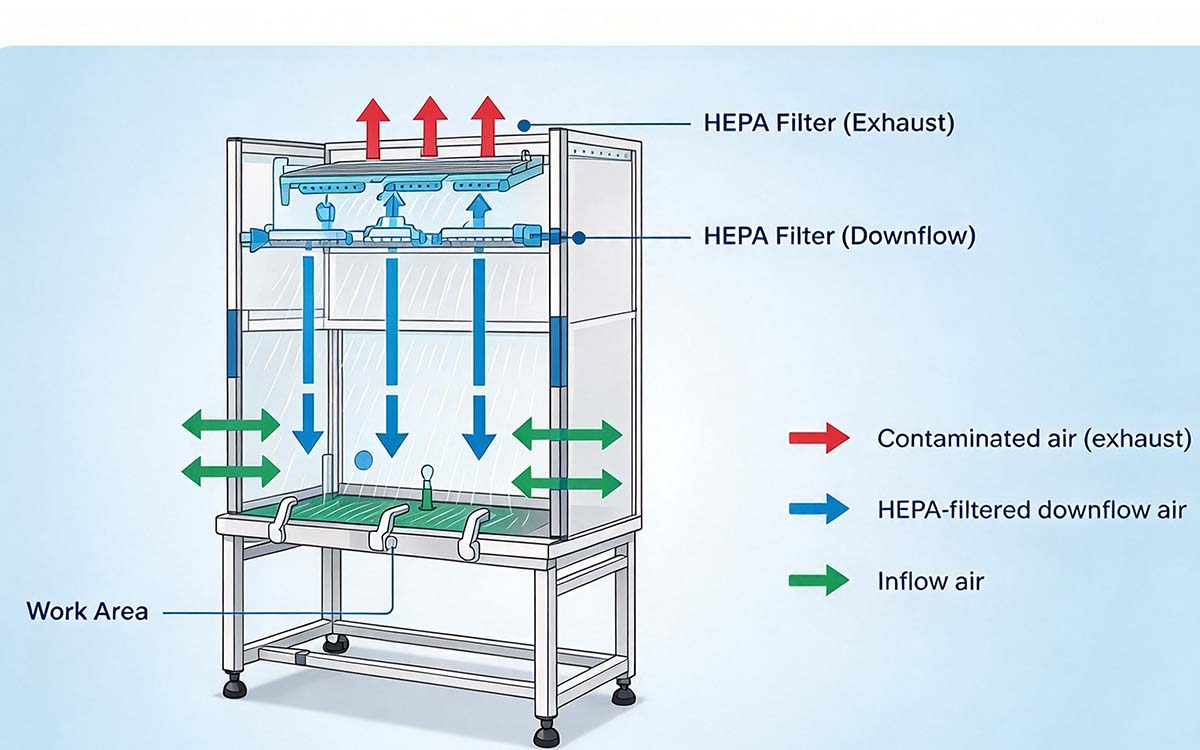
Airflow management is central to Class II biological safety cabinet design. Front inflow, filtered downflow and exhaust filtration work together according to the selected cabinet configuration.
- Controlled airflow at the front opening
- HEPA-filtered downward airflow
- Filtered exhaust according to model design
Actual airflow paths and performance values must be verified against the technical documentation for the offered model.
Product Details & Construction
Explore the main components of the cabinet, including the stainless steel work area, front controls and top exhaust connection.

Stainless Steel Working Area
A practical interior workspace designed for laboratory operations. Material grade and construction details are subject to confirmation.

Front Panel & Control Interface
The pictured unit features a turquoise front panel, a display interface and a red emergency stop button. Available control functions should be confirmed.

Top Exhaust Connection
The pictured cabinet has a top-mounted exhaust duct. Connection dimensions, exhaust requirements and installation interfaces must be confirmed for the selected model.

Cabinet Structure & Installation
Review the overall cabinet structure, support frame and service connections when planning laboratory layout and installation.
Technical Specifications
The following table provides a technical review framework. Final values must be confirmed using the actual product datasheet.
| Product Type | Class II Biological Safety Cabinet |
|---|---|
| Model | To be confirmed |
| Cabinet Type | To be confirmed (A2 / B2 / other) |
| External Dimensions (W x D x H) | To be confirmed |
| Working Area Dimensions | To be confirmed |
| Airflow Configuration | To be confirmed |
| Supply / Downflow Filter | Type and efficiency to be confirmed |
| Exhaust Filter | Type and efficiency to be confirmed |
| Downflow Velocity | To be confirmed (m/s) |
| Inflow Velocity | To be confirmed (m/s) |
| Exhaust Connection | Dimensions and requirements to be confirmed |
| Power Supply | Voltage / Frequency to be confirmed |
| Noise Level | To be confirmed (dB(A)) |
| Alarm & Control Functions | To be confirmed |
| Applicable Standards / Certifications | To be confirmed for the offered model |
Inspection & Performance Verification
Inspection procedures and documentation should correspond to the product specification, agreed acceptance criteria and applicable requirements.

Airflow Velocity Test
Verify airflow measurements against the specified acceptance criteria where included in the test scope.
HEPA Filter Integrity Test
Verify filter integrity using the agreed test method where required and available.
Electrical & Alarm Checks
Check relevant electrical functions, displays and alarms according to the selected configuration.
Inspection Documentation
Confirm the availability of inspection records, test reports and product documentation.
Laboratory Applications
Suitable applications depend on the biological risk assessment, laboratory procedures and cabinet configuration.

Microbiology Laboratories
For suitable microbiological workflows requiring controlled handling and biological containment.

Life Science & Research
For suitable research procedures involving biological materials and controlled laboratory practices.
Support for Laboratory Equipment Projects
Application Review
Discuss laboratory procedures, protection requirements and the intended working environment.
Technical Coordination
Confirm dimensions, airflow configuration, utilities and exhaust connection requirements.
Quotation Support
Review the proposed configuration, technical documentation, and delivery scope.

Looking for a Class II Biological Safety Cabinet?
Share your required dimensions, laboratory application, airflow and exhaust requirements, power supply and applicable standards. We can coordinate the proposed configuration according to your project needs.
