PRODUCT
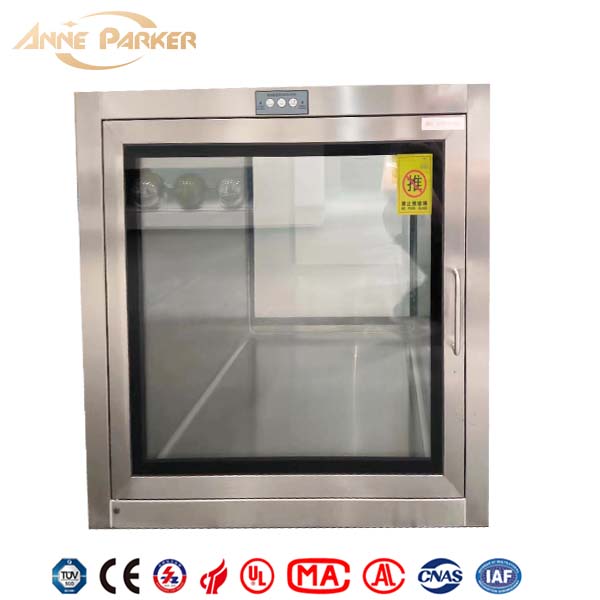
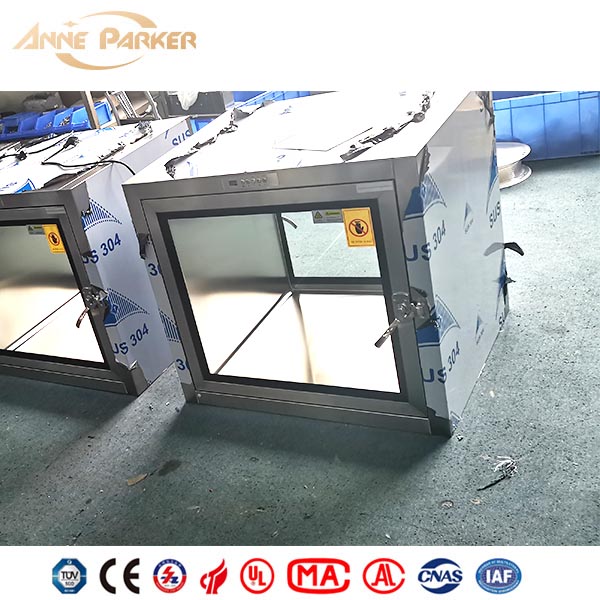
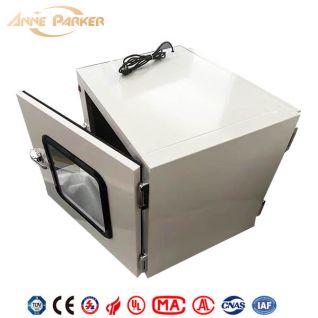
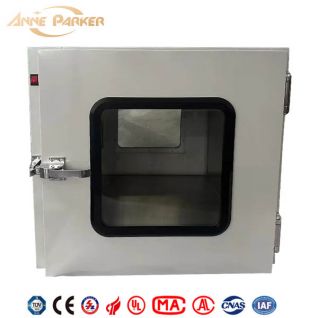
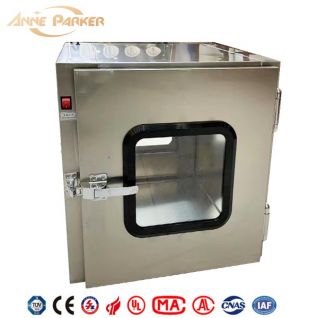
Static Pass through box for pharma cleanroom Electronic interlocking SUS304 with UV lamb
Product Attributes :
Basic performance requirements
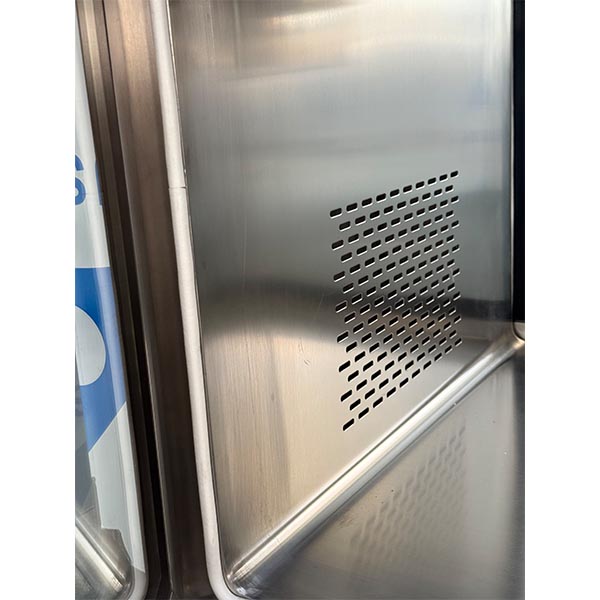
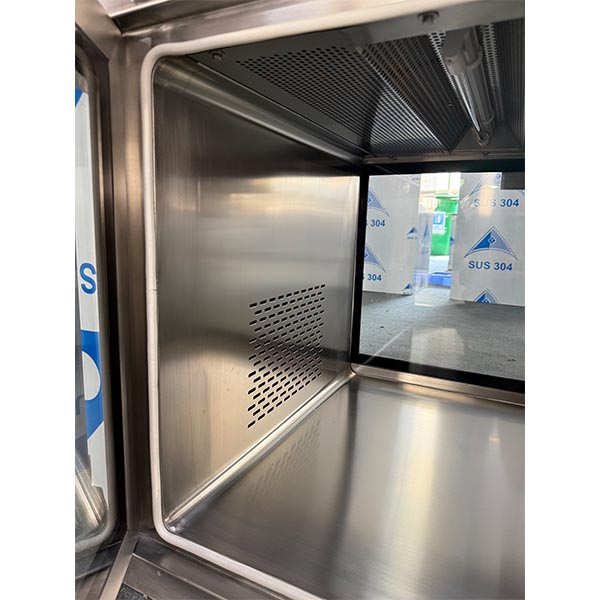
●The inner and outer double-layer shells are rounded on all sides to ensure seamless connection.
● Internal control function: UV lamp, designed with a separate switch
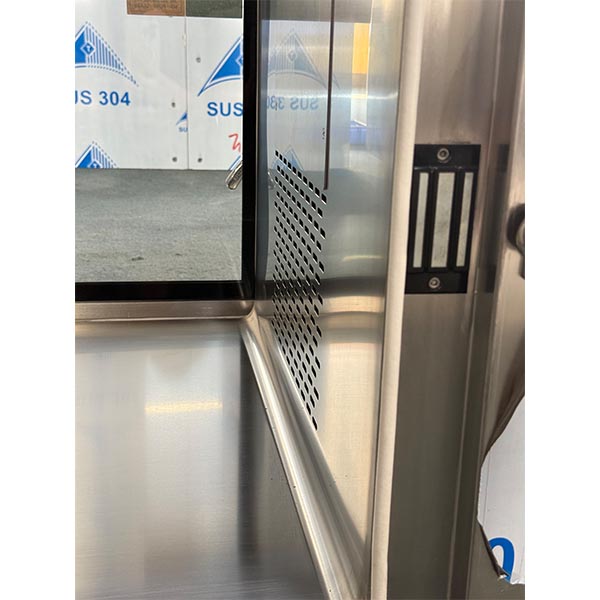
● Double door interlocking effectively prevents cross-infection.
● Can be equipped with a paging intercom
● High sealing performance
Product Description
Static Pass through box for pharma cleanroom Electronic interlocking SUS304 with UV lamb
1. Overview
The transfer window is the most effective device to prevent pollution. It features double-door interlocking. It is mainly used
for the transfer of small objects between clean rooms and non-clean areas or between clean rooms of different levels and
pressures. It effectively reduces the number of times staff members need to transport items to the clean room and prevents
external air from polluting the clean room. This equipment is widely used in the pharmaceutical industry, biological laboratories,
electronics industry, food processing industry, and other places that require air purification.
2. Installation
The transfer window is installed on the partition wall between the clean room and the non-clean room.
The installation environment: temperature is 15℃---35℃, humidity is 40%RH---70%RH.
3. Technical parameters
Model
Supply voltage
Box material
Inner wall material
Mechanical interlocking pass box
None (with UV lamp 220V/50Hz)
Cold rolled plate/stainless steel plate
stainless steel plate
Electronic interlocking pass box
220V/50Hz
Cold rolled plate/stainless steel plate
stainless steel plate
Magnetic interlocking pass box
220V/50Hz
Cold rolled plate/stainless steel plate
stainless steel plate
Model
AN-400
AN-500
AN-600
AN-800
Mechanical interlock
600*700*450
700*570*550
800*670*650
1000*870*850
Work area size
400*400*400
500*500*500
600*600*600
800*800*800
Power (Kw)
0.1
4. UV sterilization

Primary Germicidal Wavelength: UVC (short-wave ultraviolet, 200-280nm)
Mechanism of Action: UVC photons have extremely high energy and can directly penetrate the cell membranes of
microorganisms (bacteria, viruses, fungi, etc.), binding to thymine (T) in DNA/RNA, forcing the formation
of "thymine dimers (T-T)"—this abnormal structure leads to DNA strand breaks and replication errors, preventing
microorganisms from dividing and reproducing, ultimately leading to "inactivation" (equivalent to "sterilization" or direct death).
Germicidal Efficiency: The killing rate of common pathogenic bacteria (such as E. coli, Staphylococcus aureus),
viruses (such as influenza virus, COVID-19 virus), and fungal spores can reach over 99%,
making it the core working wavelength of ultraviolet sterilization lamps.
Auxiliary Wavelength: UVB (medium-wave ultraviolet, 280-320nm)
Mechanism of Action: Lower energy than UVC, it primarily inhibits microbial metabolism indirectly
by damaging the protein structure of microorganisms (such as the active sites of enzymes).
Its germicidal efficiency is far lower than UVC and is usually used as an auxiliary
or supplementary method in specific scenarios (such as surface disinfection of water).
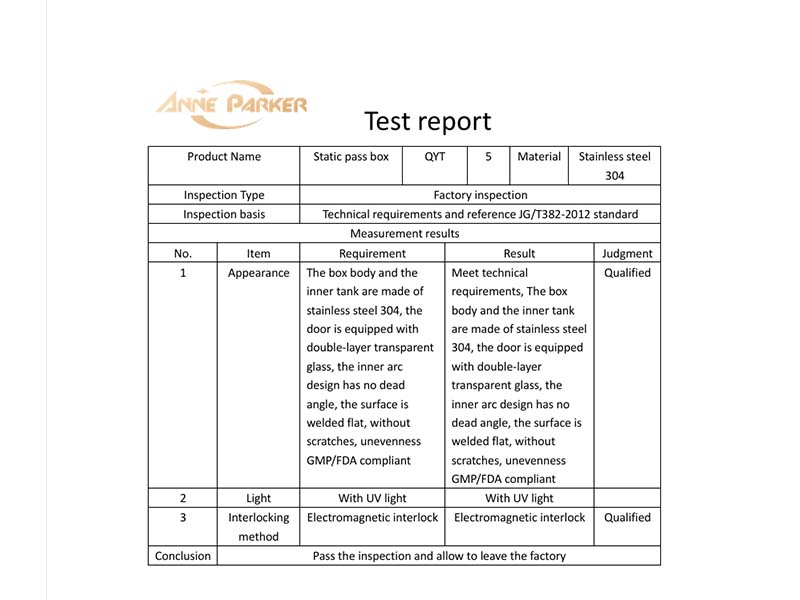
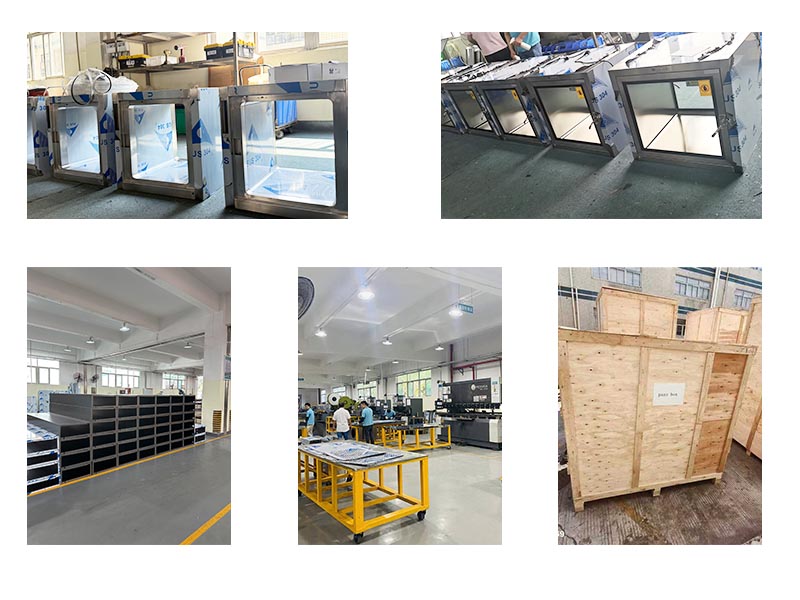
All products will be equipped with test reports before leaving the factory.